
Patient Handling Belts
Patient handling belts and gait belts for safe manual patient transfers in care homes and NHS settings, providing carers with a secure handhold during assisted walking, standing, and transfer procedures while meeting MHOR 1992 risk reduction requirements.
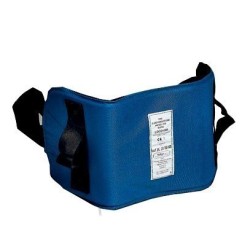
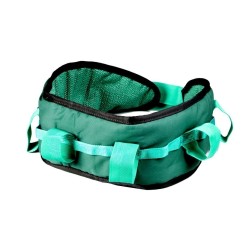
Patient Handling Belts for Safe Assisted Transfers and Walking
Clinical Summary: Patient handling belts provide care staff with a secure, purpose-designed handhold during assisted walking, standing transfers, and balance support procedures, replacing the unsafe practice of grasping patient clothing, arms, or wrists during manual transfers. They are a MHOR 1992 risk reduction measure for partial-dependency transfer situations where full hoist use is not indicated and the patient requires guided assistance rather than full mechanical support.
Patient Handling Belt Types
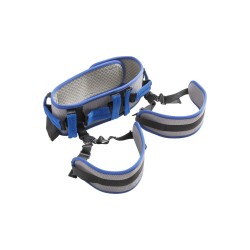
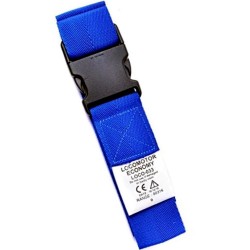
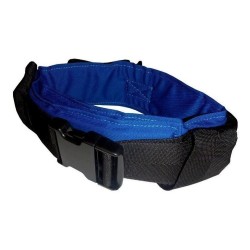
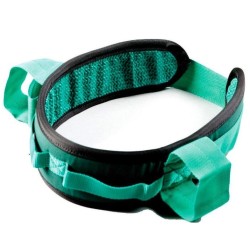
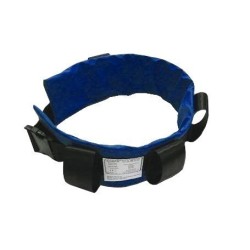
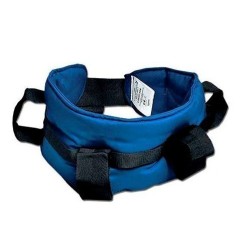
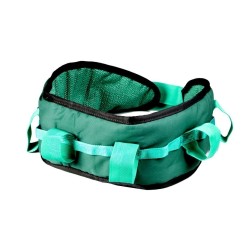
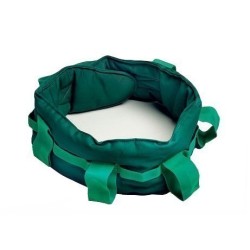
- Gait Belts: Wide padded waist belts with multiple handle positions around the circumference, allowing carers to maintain a secure grip at varying positions during assisted walking, balance support, and walking rehabilitation in care home and community settings.
- Transfer Belts with Rigid Handles: Handling belts with rigid moulded handles providing a firm grip point for carers during sit-to-stand and standing transfer procedures, offering more controlled directional assistance than webbing loop handles alone.
- Bariatric Handling Belts: Extended-circumference handling belts for patients requiring a larger belt fitting, with reinforced webbing and multiple handle points for safe manual transfer assistance of bariatric patients with partial weight-bearing ability.
- Rehabilitation and Therapy Belts: Physiotherapy handling belts used during rehabilitation walking practice and balance training exercises, providing therapists with a safety handhold during active patient participation without restricting patient movement. Not a substitute for hoist transfers in full-dependency patients.
Clinical Compliance and Safe Use Standards
Patient handling belts are a manual handling risk reduction aid and must be used within an individual patient manual handling risk assessment that confirms the patient has sufficient weight-bearing ability and cooperation to participate safely in a manually assisted transfer. Handling belts are not lifting devices and must not be used to lift or bear patient weight — they are a handhold control aid only. MHOR 1992 requires documented assessment of all patient handling procedures, and handling belt use should be specified in the individual manual handling plan with the correct technique and number of carers documented. Staff must receive training in correct belt application, handle technique, and the indications and contraindications for handling belt use versus hoist transfer.
| Belt Type | Primary Application | Patient Requirement | Key Standard |
|---|---|---|---|
| Gait Belt | Assisted walking and balance support | Weight-bearing, cooperative | MHOR 1992 |
| Rigid Handle Belt | Sit-to-stand, standing transfer | Partial weight-bearing, active | MHOR 1992 |
| Bariatric Belt | Assisted transfer, larger patients | Partial weight-bearing, higher weight | MHOR 1992 |
| Rehabilitation Belt | Walking practice, balance training | Active rehabilitation participation | MHOR 1992 / NICE CG161 |
Frequently Asked Questions
Q: Can a patient handling belt be used instead of a hoist for full-dependency patients?
A: No. Patient handling belts are a handhold control aid for patients with partial weight-bearing ability who can actively participate in the transfer. They must not be used to bear patient weight, and they are not an alternative to hoist transfer for full-dependency patients. Using a handling belt to lift or support a full-dependency patient significantly increases carer musculoskeletal injury risk and creates falls risk for the patient. Individual manual handling assessment must determine the appropriate transfer method based on patient weight-bearing status.
Q: Where should a patient handling belt be positioned on the patient?
A: A patient handling belt should be positioned around the patient waist or upper thighs depending on belt type and the specific transfer procedure, with the belt snug but not constricting — typically allowing two fingers to fit between the belt and the patient. It should be positioned over clothing rather than directly against skin. Carer hands grip the belt handles rather than the belt webbing itself, maintaining a firm controlled grip without risk of the hand slipping during the transfer movement.