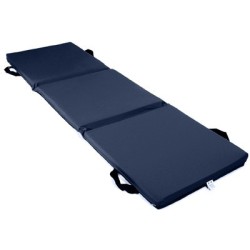
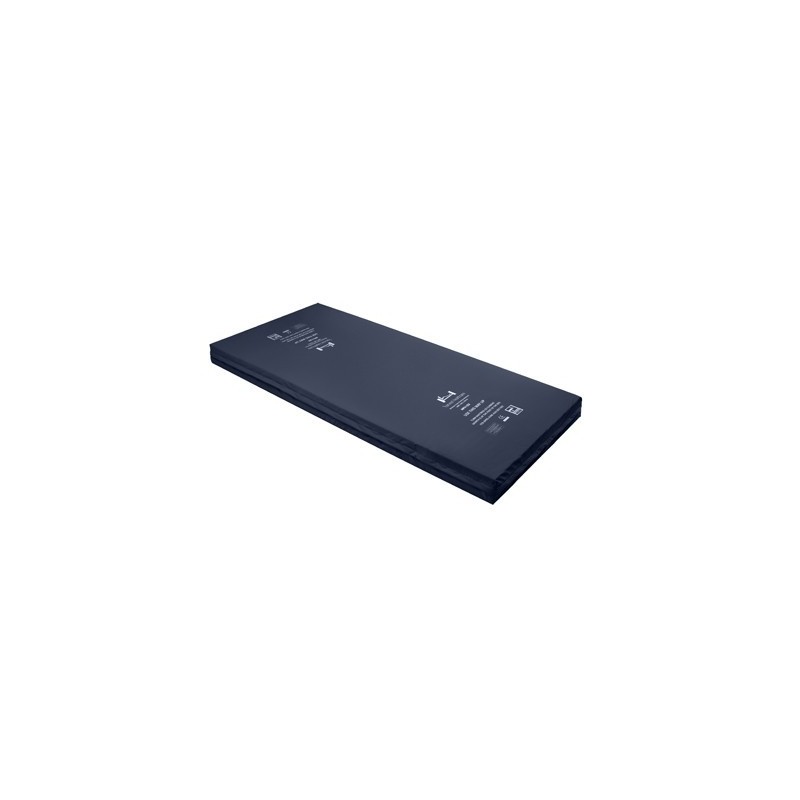


The Modular Foam Overlay places a 95mm foam pressure redistribution layer on top of an existing mattress to upgrade medium-risk pressure care without full mattress replacement. The VP water-resistant cover maintains skin microclimate management and supports NHS IPC decontamination. SWL 114kg. Available in two sizes: NCL-HFO122 (1880 x 865 x 95mm) and NCL-HFO119 (1900 x 1370 x 95mm). For residents assessed at medium risk per NICE CG179. 3-year warranty.
| Specification | Detail |
|---|---|
| NCL-HFO122 | 1880 x 865 x 95mm - standard single configuration |
| NCL-HFO119 | 1900 x 1370 x 95mm - wide configuration |
| Foam Depth | 95mm |
| Cover | VP water-resistant |
| Safe Working Load | 114kg (18 stone) |
| Clinical Risk Level | Medium risk per NICE CG179 |
| Warranty | 3 years |
The Modular Foam Overlay is a Class I passive medical device under Medical Devices Regulation 2017/745. Clinical selection requires validated pressure risk assessment per NICE CG179 confirming medium-risk status; for high or very high-risk residents, a full replacement pressure care mattress must be prescribed as the primary surface. The SWL of 114kg must be verified against the resident's documented weight per MHOR 1992; the overlay must not be used for residents above 114kg. The overlay adds 95mm to the effective height of the sleeping surface, which raises the resident's position relative to the bed rails and the floor; this height change must be factored into the bed rail entrapment risk assessment and transfer safety assessment before deployment. Equipment register records and MDR conformity documentation must be maintained for CQC Regulation 12 compliance.
What is the clinical difference between a foam overlay and a replacement mattress, and when is an overlay sufficient?
A foam overlay is placed on top of an existing mattress and relies on the existing mattress to provide the base structural support, while adding a conforming foam surface layer for pressure redistribution. A replacement mattress replaces the existing mattress entirely and provides both the base support and the pressure redistribution surface as a single integrated clinical surface. An overlay is clinically sufficient when: the existing mattress is in good condition and provides adequate structural support within the resident's weight range; the resident's pressure risk is assessed as medium rather than high or very high; the primary clinical goal is to improve the pressure redistribution performance of a serviceable existing mattress rather than to replace it for clinical reasons; and the added height of the overlay does not create bed rail entrapment or transfer safety concerns. When any of these conditions is not met - particularly when the existing mattress is in poor condition, the resident's risk level is high, or the overlay height creates safety concerns - a replacement mattress is the appropriate prescription.
Does placing a foam overlay on top of an existing mattress affect the performance of the underlying mattress or the bed profile?
Yes, in several ways. First, the overlay raises the effective sleeping surface by 95mm, which changes the height relationship between the resident and the bed rails, the bed controls, and the floor; this must be reassessed before deployment to confirm that the new height does not create an entrapment risk between the raised mattress surface and the bed rail, and that the resident can still exit the bed safely without a new fall risk from the additional height. Second, if the overlay is placed on a profiling bed, the foam must flex with the bed's profiling movements; an overlay that does not have keyhole slots or flexible construction may resist the bed's profiling angle, preventing the bed from reaching its prescribed head or knee elevation. Third, the overlay adds weight to the sleeping surface assembly, which is relevant if carer repositioning involves handling the overlay separately from the mattress. The clinical team should confirm each of these implications before deploying the overlay in any new care environment.