
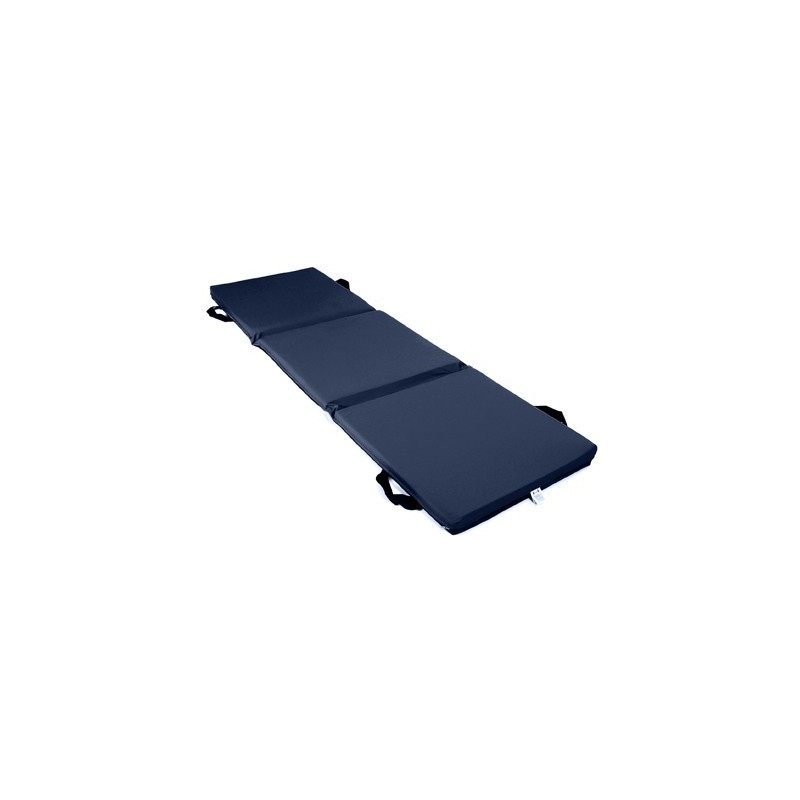


The Folding Fall Mat provides floor cushioning alongside low and ultra-low beds during overnight periods, folding for space-efficient storage during the day. The non-slip base prevents mat displacement on contact with a falling resident, maintaining the cushioning position throughout the fall event. The VP cover supports wipe-clean decontamination after floor contact. 1800 x 600 x 64mm; 1-year warranty. Deployed as part of a falls management plan per NICE CG161 and NICE NG45.
| Specification | Detail |
|---|---|
| Dimensions (deployed) | 1800 x 600 x 64mm |
| Base | Non-slip for floor grip during fall events |
| Cover | Vapour-permeable |
| Storage | Folds to approximately half length for upright storage |
| Bed Compatibility | Low and ultra-low beds |
| Reference | NCL-HFM104NS |
| Warranty | 1 year |
The Folding Fall Mat is a clinical safety accessory used within a documented falls prevention and management plan under NICE CG161 and NICE NG45. Deployment must be documented in the resident's individual risk management plan, including the overnight deployment schedule and the responsible carer's confirmation that the mat is in position at the start of each night period. The non-slip base must be cleaned per NHS IPC guidance following any floor contact event; the VP cover must be decontaminated using an approved disinfectant and the cover integrity confirmed before return to service. CQC Regulation 12 requires registered providers to assess and mitigate all reasonably foreseeable risks of harm; the documented use of a fall mat as part of an individualised falls plan is evidence of that risk mitigation activity and must be retained for inspection.
When should a folding mat be used instead of a fixed flat mat, and does folding affect cushioning performance?
A folding mat is preferred over a fixed flat mat when the room floor space is insufficient to leave the mat deployed during the day without creating a trip hazard for carers, the resident, or visitors. In smaller single rooms common in care homes, the 1800mm length of a deployed fall mat may occupy a significant proportion of the floor space between the bed and the room wall or door, creating a daily hazard if left in place. The folding design allows the mat to be stored upright when not needed and deployed quickly at the start of each overnight period without the logistical burden of removing and replacing a large rigid mat. Folding does not affect the cushioning performance of the foam when the mat is correctly deployed and lying flat on the floor; the performance reduction risk arises if the fold point retains a permanent crease that prevents the mat from lying fully flat, creating a ridge at the centre that concentrates rather than distributes impact energy. The mat must be inspected at each deployment to confirm it lies flat, and replaced if permanent creasing is detected.
Should the fall mat be left deployed throughout the night, and what happens if the resident contacts the mat before a full fall?
Yes, the mat should remain deployed throughout the overnight period from the time the resident retires to bed until they rise in the morning, as falls from bed occur most commonly during nighttime or early morning periods when the resident attempts to get up unassisted. Removing the mat during the night - for example during a repositioning visit - and not replacing it creates a window of unprotected floor time that may coincide with an unwitnessed fall attempt. If the resident sits on the mat edge rather than falling onto it, or if they roll partially off the bed and rest on the mat surface while awake and able to call for assistance, the mat provides a safe resting surface; its VP cover maintains comfort at the contact surface and the foam distributes body weight to reduce pressure injury risk during any period of floor-level contact while awaiting carer response. The mat must not be used as a deliberate repositioning or floor-level seating surface for the resident; its clinical purpose is specifically fall impact management, and any resident found on the mat surface must be assessed for injury and assisted back to bed promptly.