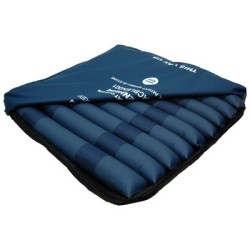
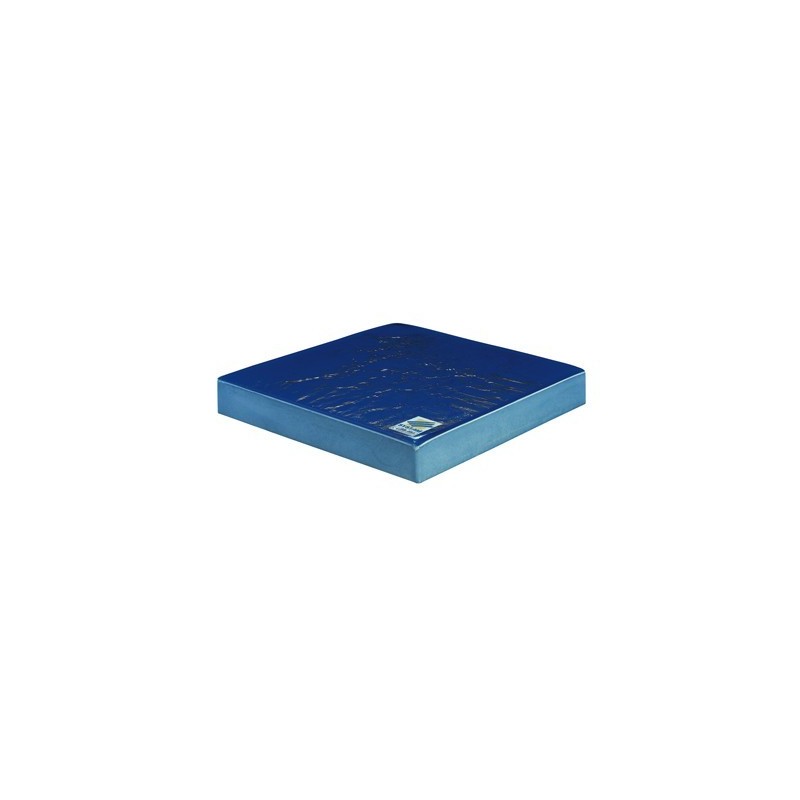

The Mixte Cushion provides medium-to-high-risk seated pressure redistribution using a permanently bonded reticulated polyurethane gel top layer on a high-resilience foam base. The reticulated gel prevents migration and punching through to the base while the permanent bond eliminates delamination risk. SWL 90kg (14 stone) - verify before issue. Four-way stretch welded water-resistant cover. 400 x 400 x 60mm. Pairs with Prime Comfort mattress for 24-hour care. MDR 2017/745 Class I medical device.
| Specification | Detail |
|---|---|
| Dimensions | 400 x 400 x 60mm |
| Top Layer | Reticulated polyurethane gel (permanently bonded) |
| Base | High-resilience foam |
| Cover | 4-way stretch welded water-resistant |
| Safe Working Load | 90kg (14 stone) - verify before issue |
| Paired Mattress | Prime Comfort (NCL-HSMPRIM) |
| Reference | NCL-P314C40401HF |
| Clinical Risk Level | Medium-high risk per NICE CG179 |
| Regulatory Status | MDR 2017/745 Class I medical device |
The Mixte Cushion is a Class I medical device under MDR 2017/745. Clinical selection requires occupational therapist assessment per NICE CG179. The SWL of 90kg is a hard limit that must be verified against the resident's documented weight per MHOR 1992 before issue; this cushion must not be used for residents above 90kg. Equipment register records and MDR conformity documentation must be maintained for CQC Regulation 12 compliance.
What is reticulated gel, and how does it differ from standard viscoelastic gel?
Reticulated gel has an open-cell or mesh-like internal structure that allows the gel to deform and conform under load without the gel material itself migrating across the surface as a liquid-like mass. Standard viscoelastic gel in a sealed flat layer can migrate laterally under high point-loads at bony prominences, causing the gel to thin over the area of highest load and thicken away from it - a phenomenon called punching through or gel bottoming out, where the gel displaces so far that the bony prominence is in near-contact with the foam base beneath. Reticulated gel resists this migration because its internal structure provides a degree of lateral resistance to displacement, maintaining the gel layer thickness at the pressure point and distributing the load more evenly across the gel surface. The result is more consistent pressure redistribution across repeated seating cycles and at the higher end of the weight range. The permanently bonded construction additionally prevents the reticulated gel layer from shifting relative to the foam base, which is the second failure mode that can compromise gel-foam hybrid cushion performance.
Why does the Mixte Cushion have a lower SWL than comparable gel-foam cushions in this range?
The 90kg SWL of the Mixte Cushion reflects the load capacity of the specific gel and foam combination used in its construction; the reticulated gel layer and the HR foam base are specified and bonded at a thickness and density that provides optimal pressure redistribution within the 90kg weight range. Above 90kg, the gel layer approaches its displacement limit at the ischial tuberosity contact points and the foam base may begin to show progressive compression set under sustained higher loads, both of which reduce the clinical pressure redistribution performance below the standard required for medium-to-high risk care. This is not a manufacturing quality limitation but a clinical specification: the Mixte Cushion is optimised for residents within the 90kg range, and prescribing it above that limit would mean using it outside its validated clinical performance envelope. For residents at medium-to-high seating risk who weigh above 90kg, alternative cushions with higher SWL ratings must be assessed and prescribed by the occupational therapist; the Duoform range (ID 186) at SWLs up to 160kg, or the Viscoflex Plus Bariatric Cushion for residents above that, would be the appropriate next step.