
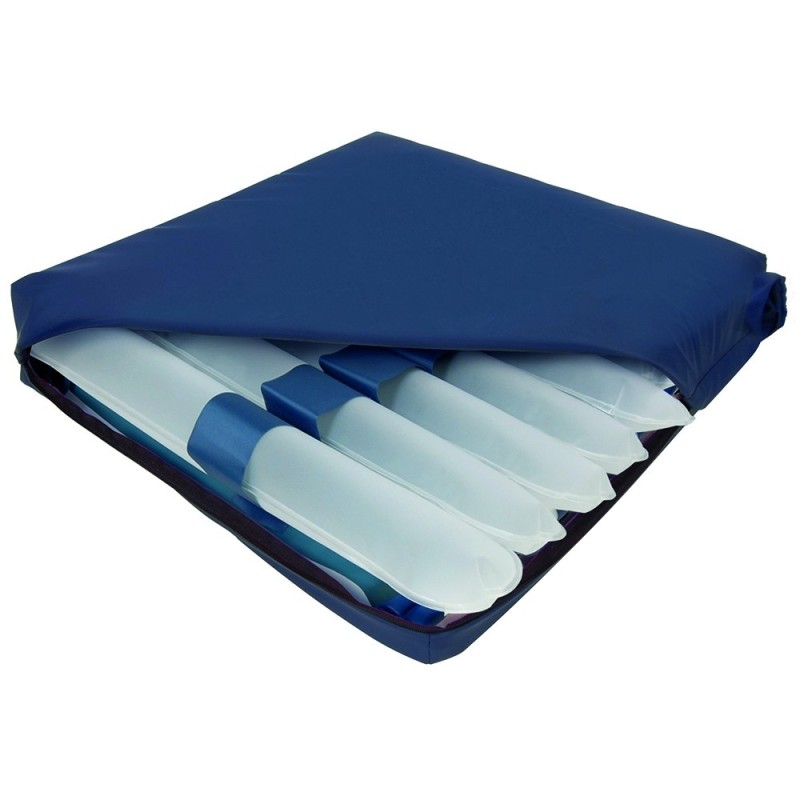


The Active Seat System (NCL-HH20) provides 6-cell alternating pressure redistribution for very high-risk seated pressure care, with an integrated foam base that maintains support when cells are in the deflation phase. Compatible with both Harvest 1 and Harvest 250 pumps. Available in four configurations. SWL 158kg. 400 x 430 x 90mm. Pairs with Hampton II mattress for 24-hour active pressure care. MDR 2017/745 Class IIa active medical device.
| Specification | Detail |
|---|---|
| Active Cells | 6 alternating air cells with foam base |
| Dimensions | 400 x 430 x 90mm |
| Safe Working Load | 158kg (25 stone) |
| Cover | 4-way stretch zipped water-resistant |
| Base | Non-slip |
| NCL-HH20.P1 | Cushion only - Harvest 1 pump |
| NCL-HH20.P250 | Cushion only - Harvest 250 pump |
| NCL-HH20.HPU1 | Complete system with Harvest 1 pump |
| NCL-HH20.HPU250 | Complete system with Harvest 250 pump |
| Paired Mattress | Hampton II (NCL-HAMHAMP005) |
| Clinical Risk Level | Very high risk per NICE CG179 |
| Regulatory Status | MDR 2017/745 Class IIa active medical device |
The Active Seat System is a Class IIa active medical device under MDR 2017/745. Clinical selection requires occupational therapist assessment per NICE CG179 confirming very high-risk seating need. SWL of 158kg must be verified per MHOR 1992. The pump must be confirmed operational and secured safely; tubing must be managed to prevent trip hazards adjacent to the chair. The pump and cushion variant codes must be confirmed compatible before issue; the P1 cushion variant must not be connected to a Harvest 250 pump and vice versa. Equipment register records including both pump and cushion serial numbers and MDR conformity documentation must be maintained for CQC Regulation 12 compliance.
What is the clinical difference between the Active Seat System (6-cell) and the Blenheim Active Seat Cushion (9-cell)?
Both are active alternating seat cushions for very high-risk seating pressure care, but they differ in cell count, pump compatibility, and overall depth. The Active Seat System uses 6 alternating cells on a foam base at 400 x 430 x 90mm and accepts both the Harvest 1 and Harvest 250 pumps, providing procurement flexibility and a deeper profile with the foam base that eliminates the risk of cell deflation contacting the seat surface. The Blenheim uses 9 alternating cells without a separate foam base at 460 x 460 x 60mm and requires the Harvest 250 specifically; the higher cell count provides more granular alternating coverage of the seated contact zone but at a shallower profile. The clinical selection is based on the resident's seated anatomy and pressure care needs: a resident where complete ischial and sacral coverage across a wider zone is the priority may benefit from the Blenheim's 9-cell arrangement; a resident where the foam base failsafe function and dual-pump compatibility are clinically or operationally important may be better served by the Active Seat System. The occupational therapist should make this determination based on the individual assessment and the care setting's existing pump infrastructure.
How should the pump and tubing be managed to prevent trip hazards when using an active seat cushion in a care home?
An active seat cushion requires the pump to run continuously during use, which means the pump and its power cable and the tubing connecting the pump to the cushion are all present at the chair position throughout the period the cushion is in use. The pump should be secured to the chair frame using a purpose-designed pump bag or bracket where available, or positioned on a stable surface immediately adjacent to the chair at floor level. The tubing should be routed along the chair frame or taped to prevent it from lying across the floor in areas where carers or the resident may walk; a tubing loop left at floor level between the pump and the cushion is a significant trip hazard. The power cable from the pump to the mains outlet should be routed along the baseboard or secured with cable clips, not laid across the room or in doorways. The care team must complete a specific risk assessment for the seated pump configuration before the cushion is issued; this assessment must address trip hazard routing, power outlet proximity, and the resident's ability to move the pump accidentally during repositioning.
