
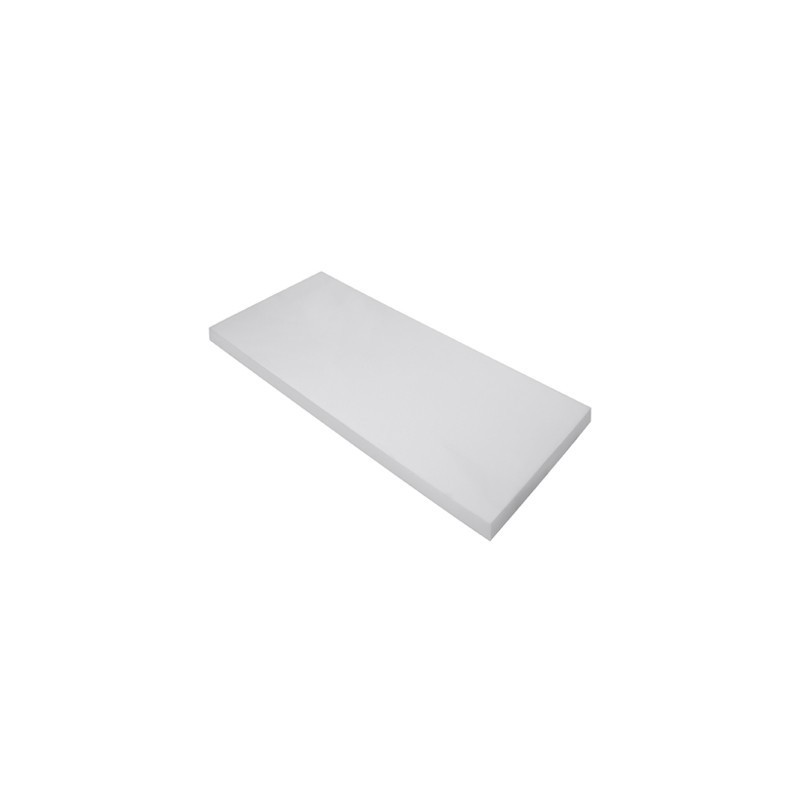


The 50mm White Foam Underlay is positioned on the bed base beneath an overlay mattress system, providing a basic foam comfort and support layer that protects the resident from direct contact with the hard bed base in the event of the primary overlay system failing. The VP cover maintains moisture vapour management compatibility with the overlay system above. Dimensions 2000 x 900 x 50mm match the standard UK single bed profile. 3-year warranty. No SWL stated - not a primary pressure care device.
| Specification | Detail |
|---|---|
| Type | Foam underlay - beneath overlay mattress systems |
| Depth | 50mm |
| Cover | Vapour-permeable |
| Dimensions | 2000 x 900 x 50mm |
| Safe Working Load | Not stated - not a primary pressure care device |
| Clinical Role | Failsafe comfort layer on primary overlay system failure |
| Reference | NCL-HFU110 |
| Warranty | 3 years |
The 50mm Foam Underlay is a comfort accessory and is not a primary clinical pressure care device. It must be used in conjunction with a clinically prescribed overlay mattress system; it does not replace the requirement for a full pressure redistribution surface selected per NICE CG179 assessment. In the context of an active alternating overlay system, the underlay reduces the clinical risk during system failure periods but does not provide the alternating pressure therapy of a functioning system; care staff must respond promptly to pump alarms and confirm the system is functioning at each assessment. The underlay dimensions must match the bed frame profile; a mismatch will result in gaps or overhang that affect the performance of the overlay system above it. Equipment records for the complete mattress system must include the underlay as a component.
Is the foam underlay used with all types of overlay mattresses, or only active alternating overlays?
The foam underlay can be used beneath both static foam overlays and active alternating overlays, but its clinical value is most significant in the active alternating context. Beneath a static foam overlay, the underlay adds a second foam layer that marginally increases the total depth and redistributive capacity of the system, which can be beneficial if the overlay alone does not provide sufficient depth for the resident's weight and risk profile. Its failsafe role in this context is less clinically critical because a static overlay does not have a system failure mode in the same sense as an active system. Beneath an active alternating overlay, the failsafe function of the underlay becomes the primary clinical justification, particularly for overnight use in settings where a single carer may not be immediately available to respond to a pump alarm. The care team should assess whether a foam underlay is part of the system specification for the specific alternating overlay in use, as some active overlay systems have an integrated foam base layer that makes a separate underlay unnecessary.
Does the 50mm depth of the underlay affect the performance of the overlay system placed on top of it?
The underlay adds 50mm to the total height of the mattress system from the bed base to the sleeping surface, which raises the resident's position relative to the bed rails and the floor. This has the same implications as any mattress height addition - the bed rail entrapment risk assessment and transfer safety assessment must account for the 50mm height increase. The underlay also introduces a slightly compliant base beneath the overlay rather than the rigid bed base that the overlay may have been designed to sit on; for most foam overlays this has minimal effect on performance, but for active alternating overlays where the pump is calibrated for a specific base surface resistance, the additional compliance of the foam underlay may marginally affect the cell inflation pressure. If the overlay system's pump settings are based on a rigid base configuration and the underlay is introduced as a new component, the care team should monitor that the alternating cell inflation profile remains within the prescribed pressure range and recalibrate the pump if necessary.
