
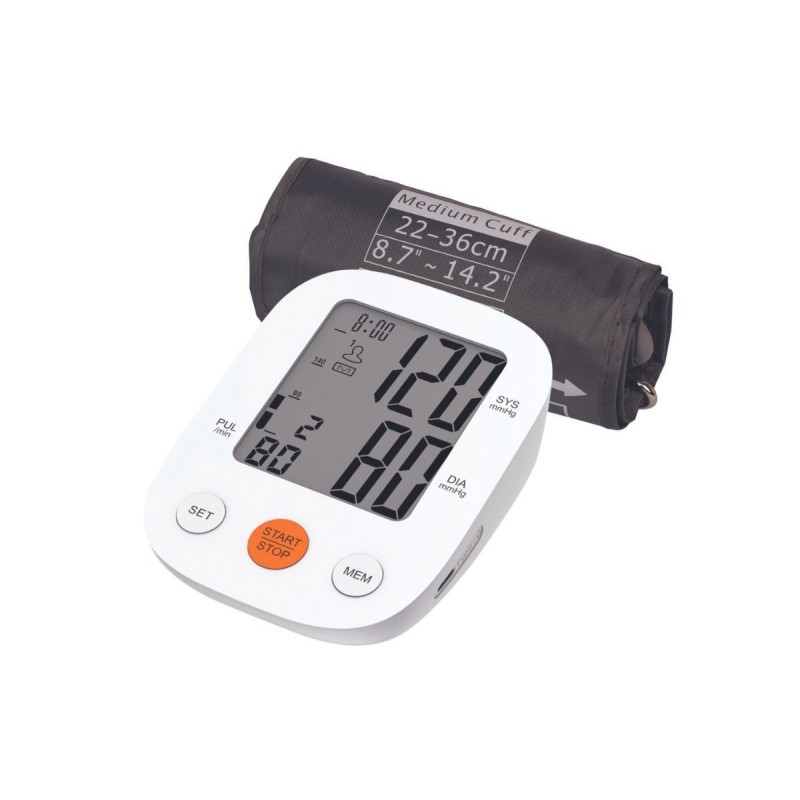

The Alerta Digital Blood Pressure Monitor is an automatic upper arm blood pressure monitor measuring systolic pressure, diastolic pressure and pulse rate with WHO colour-coded classification, irregular heartbeat (IHD) detection, 2-user memory of 90 readings each, and automatic display of the last 3-reading average. Designed for home blood pressure monitoring in community and care settings, it supports the NICE Guideline NG136 (Hypertension in Adults) HBPM protocol which requires multiple readings across several days for clinical reliability. The supplied upper arm cuff fits 22-36cm circumference and the high-definition backlit display ensures readings are accessible for users with reduced visual acuity.
| Specification | Detail |
|---|---|
| Product Code | NCL-ALT-DE200 |
| Measurement | Systolic, diastolic blood pressure and pulse rate |
| Method | Automatic inflation and deflation (oscillometric) |
| Display | Large HD backlit display |
| Classification | WHO colour-coded BP scale |
| Irregular Heartbeat | IHD detection indicator |
| Memory | 2 users, 90 readings each; average of last 3 displayed |
| Cuff Size | 22-36cm upper arm circumference (included) |
| Power | 4x AAA batteries |
| Auto Shut-Off | Yes |
NICE Guideline NG136 (Hypertension in Adults: Diagnosis and Management) recommends home blood pressure monitoring as the preferred method for confirming hypertension diagnosis following an elevated clinic reading. The Alerta Digital Blood Pressure Monitor supports the NG136 HBPM protocol with its multi-reading memory and average calculation: NG136 specifies that HBPM should involve two readings taken twice daily for at least four days, with the first-day readings discarded and the average of the remaining readings used for clinical decision-making. The monitor's 90-reading memory accommodates a full NG136 HBPM protocol without memory overflow. The IHD detection indicator supports NHS England's AF detection initiative which identifies BP monitoring as an opportunistic AF detection opportunity in community settings. A positive IHD reading should prompt clinical review using an ECG-validated AF detection tool rather than constituting a diagnostic result in its own right.
What should a patient do if the irregular heartbeat indicator appears during a reading?
If the IHD indicator appears, the patient or carer should note the reading and the IHD activation and report it to the patient's GP or prescribing nurse at the next scheduled appointment, or sooner if the patient also experiences symptoms such as palpitations, shortness of breath or chest discomfort. The IHD indicator is a screening alert that flags a potentially irregular cardiac rhythm during the measurement period: it does not diagnose atrial fibrillation or any other specific arrhythmia, and a single positive reading is not sufficient to diagnose a rhythm abnormality. The GP may arrange an ECG or Holter monitor assessment to investigate persistent or symptomatic irregular rhythm findings. Patients should not adjust medications in response to an IHD indicator reading without GP or nurse advice.
Is the cuff supplied with the monitor suitable for all adults, and when is a large cuff required?
The supplied cuff fits upper arm circumferences of 22-36cm, covering the majority of the adult population in standard clinical practice. Patients whose upper arm circumference exceeds 36cm, typically larger adults and some bariatric patients, require a large or extra-large cuff that is not supplied with the standard monitor. Using a cuff that is too small for the arm generates falsely elevated blood pressure readings, a clinically significant measurement error that can lead to unnecessary medication changes. Measure the patient's upper arm circumference at the midpoint between shoulder and elbow before the first use to confirm the supplied cuff is appropriate. If a larger cuff is required, source compatible accessories before initiating the monitoring programme.
Part of our professional Clinical Medical Equipment range. Blood pressure monitors provide accurate cardiovascular monitoring for care home residents and home care patients across the UK.
