
Walking Aids
Walking aids including sticks, frames, and rollators for mobility support and falls prevention in care homes and community settings, selected through physiotherapy assessment to meet NICE CG161 falls prevention and CQC independence standards.
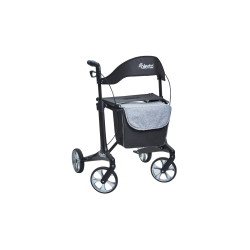
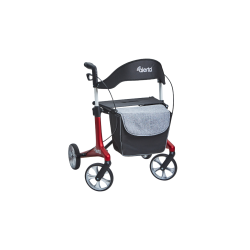
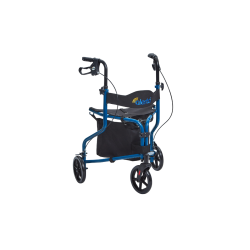
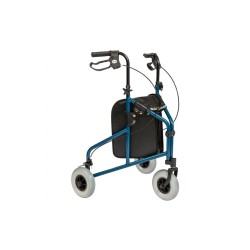
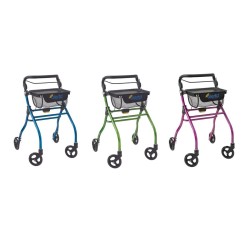
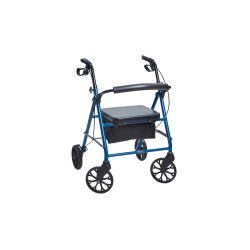
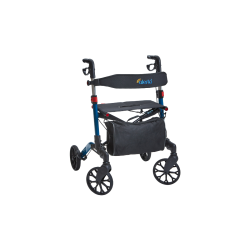
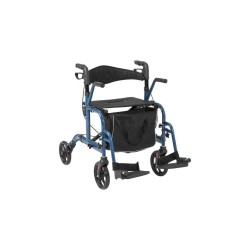
Walking Aids for Mobility Support and Falls Prevention
Clinical Summary: Walking aids support safe ambulation and reduce falls risk for patients with reduced balance, lower limb weakness, or pain affecting gait, and are a recognised intervention within NICE CG161 multifactorial falls prevention programmes. Selection, fitting, and instruction in correct use by a physiotherapist or appropriately trained clinician is essential, as an incorrectly specified or poorly taught walking aid can increase rather than reduce falls risk in care home and community environments.
Walking Aid Types
- Walking Sticks: Single-point walking sticks and quad sticks providing lateral stability support for patients with mild to moderate balance or lower limb difficulties, adjusted to the correct height for the individual user to maintain upright posture during ambulation.
- Standard Walking Frames: Rigid four-point walking frames providing maximum indoor stability for patients with significant balance or lower limb weakness, used with a step-to gait pattern and suited to care home corridor and room ambulation. Requires adequate upper limb strength and indoor turning space for safe use.
- Wheeled Walkers and Rollators: Two-wheeled and four-wheeled rollators with hand brakes and seats providing walking support across varied surfaces and longer distances, enabling outdoor mobility for patients with moderate walking difficulty in community settings.
- Crutches and Elbow Crutches: Axillary and elbow crutches for post-operative, fracture, and lower limb injury rehabilitation requiring partial or non-weight-bearing ambulation under physiotherapy supervision in hospital and community settings.
Clinical Compliance and Walking Aid Standards
Walking aids supplied by Care Supplies carry MHRA registration where applicable and meet the safety standards appropriate to their classification. NICE CG161 includes strength and balance exercise, home hazard assessment, and walking aid review as components of the multifactorial falls prevention programme, and walking aids should be selected and reviewed as part of the documented falls prevention care plan for at-risk residents. Ferrule replacement is an essential maintenance requirement for all walking sticks and frames, as worn ferrules significantly reduce grip and increase slip risk on smooth flooring surfaces. Care homes should include walking aid ferrule inspection in regular equipment checks, with replacement documented in maintenance records.
| Walking Aid | Support Level | Gait Pattern | Key Standard |
|---|---|---|---|
| Walking Stick | Mild lateral support | Normal reciprocal gait | NICE CG161 |
| Walking Frame | Maximum indoor stability | Step-to pattern | NICE CG161 |
| Rollator | Moderate, varied surfaces | Reciprocal with support | NICE CG161 / MHRA |
| Elbow Crutches | Partial or non-weight-bearing | Crutch-assisted gait | MHRA / Physio assessment |
Frequently Asked Questions
Q: How should a walking frame be measured for the correct height?
A: A walking frame should be adjusted so the handles are at wrist height when the user stands upright with arms relaxed by their sides. At this height, the elbows should bend at approximately 15 to 30 degrees when gripping the handles, allowing effective weight-bearing through the arms without shoulder elevation or elbow locking. Height adjustment should be made by a physiotherapist or trained care staff member, and the correct height documented in the resident walking aid assessment.
Q: How often should walking aid ferrules be replaced in a care home?
A: Ferrule replacement frequency depends on floor surface type and walking aid use intensity. On smooth hard flooring — typical of care home corridors — ferrules should be inspected monthly and replaced when any wear to the grip pattern is visible, or immediately if cracking, splitting, or significant wear is found. Worn ferrules on smooth flooring significantly increase slip risk and have been a contributing factor in care home falls. Replacement ferrules are low-cost and should be kept in stock.