
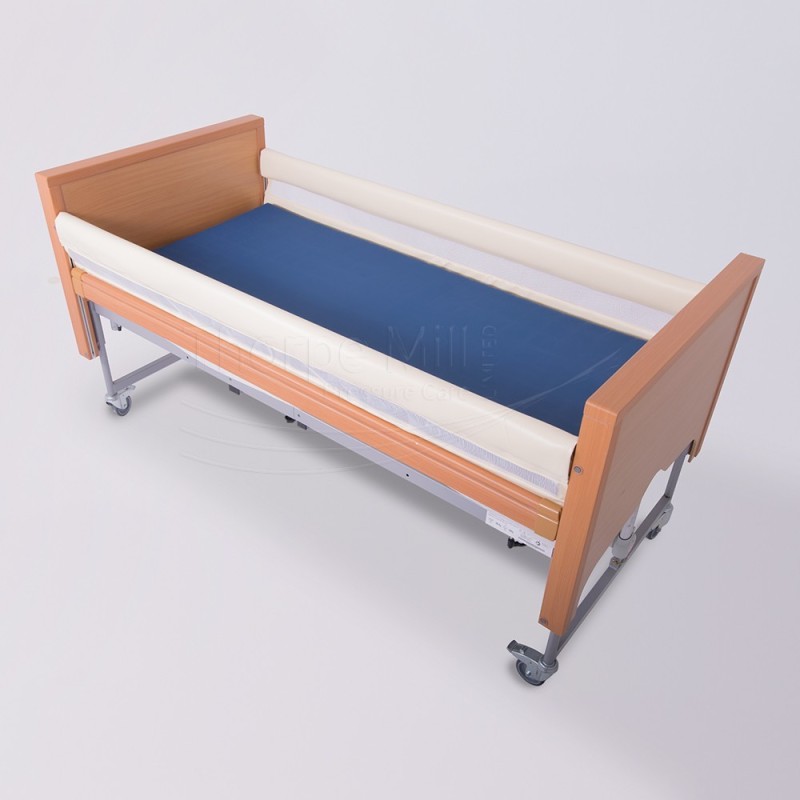

The Two Rail Bumper with Net Window and Net Base (200cm) features a split net base that prevents the bumper from touching the floor when the profiling bed side rails are lowered, eliminating the floor-contamination risk associated with standard bumpers in care home and hospital environments. Wipe-clean outer material supports NHS IPC decontamination; concertina net window maintains carer visibility. Hook and loop fastenings; supplied in pairs. Available in 180cm (NCL-TRCSB18-CB) and 220cm (NCL-TRCSB22-CB).
| Specification | Detail |
|---|---|
| Reference | NCL-TRCSB-CB |
| Length | 200 cm |
| Key Feature | Split net base - floor-clear when rails lowered |
| Net Window | See-through mesh; concertina |
| Outer Material | Wipe-clean |
| Fastening | Hook and loop |
| Supplied | In pairs |
| Other Lengths | NCL-TRCSB18-CB (180cm); NCL-TRCSB22-CB (220cm) |
NHS IPC infection control guidance identifies floor surfaces as a source of environmental contamination; equipment that contacts the floor and is then repositioned at the patient bedside level represents a potential cross-contamination pathway. The net base floor-clear design eliminates this specific pathway during routine rail-lowering for care access, reducing the additional decontamination burden that floor contact would otherwise impose. CQC Regulation 12 (safe care) requires that equipment used in care delivery does not expose residents to unnecessary infection risk; the net base design directly supports this by maintaining hygiene standards during the most frequent care workflow step - lowering and raising the bed rails for access.
What is the clinical benefit of the net base keeping the bumper floor-clear?
When a standard bumper without a net base is lowered with the bed rail, the padded cover hangs down and rests on the floor, picking up floor contamination including environmental bacteria, spillage residue, and footwear-borne soil. When the rail is raised, this contaminated surface is brought up to the resident's bedside level and directly adjacent to the resident's skin and bedding. In NHS IPC terms, this creates a floor-to-bed contamination pathway that occurs multiple times per day during routine care. The net base holds the bumper away from the floor, maintaining the hygiene of the cover surface throughout the care episode.
How does the split net base work when the rails are lowered?
The split net base is positioned below the lower padded rail cover and fans outward as the rail is lowered, creating a tensioned net platform beneath the bumper that holds it off the floor surface. The split design allows the net to open and close around the bed base structure without snagging as the rail is raised and lowered. When the rail is raised, the net base folds back to its resting position beneath the lower bumper, out of the way of care access. The system operates without manual adjustment by the carer during routine rail lowering and raising.