
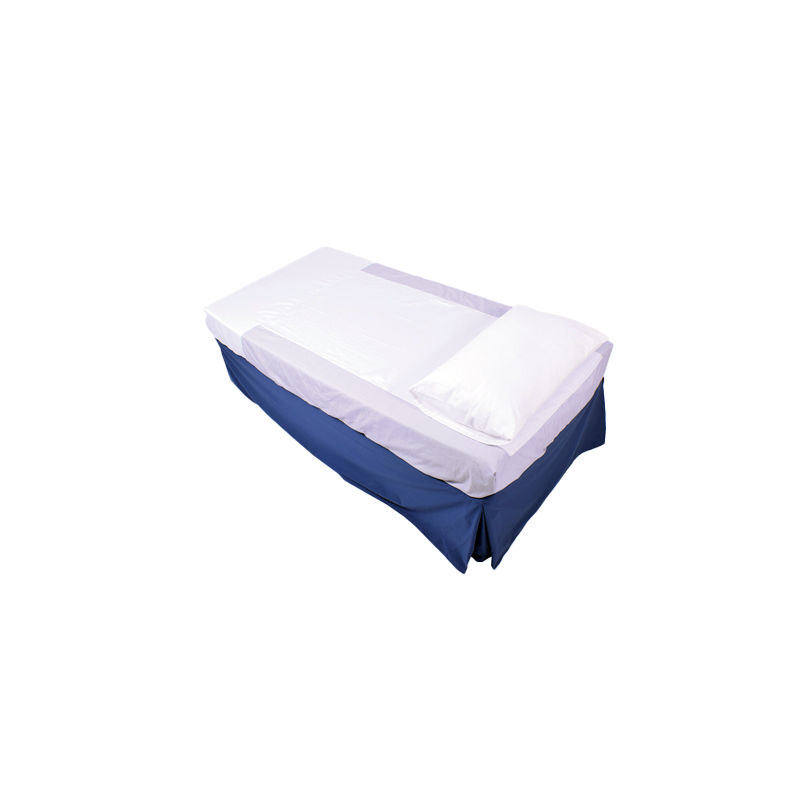


The Turn Easy fitted sheet range provides a central low-friction satin panel across the active repositioning zone of the bed, reducing the friction between the bed surface and the resident or draw sheet during turning and repositioning manoeuvres. The outer fabric sections grip the mattress to maintain sheet position during use. Available in single and double bed sizes, the sheets are hot washable for care home and hospital laundry compliance and are manufactured in the UK. Supports MHOR 1992 manual handling reduction obligations and NICE CG179 tissue viability protocols.
| Specification | Detail |
|---|---|
| NCL-TES-FSC | Single - 200 x 90cm (Satin panel: 150 x 70cm) |
| NCL-TES-FSF | Single - 200 x 90cm (Full satin foot end) |
| NCL-TES-FSD | Double - 200 x 137cm (Satin panel: 150 x 70cm, one side) |
| Satin Panel Function | Low-friction surface for repositioning and turning |
| Outer Fabric | Higher-friction grip material to prevent sheet migration |
| Wash Compatibility | Hot washable - suitable for institutional laundry |
| Origin | Manufactured in the UK |
The Turn Easy fitted sheet range directly supports compliance with the Manual Handling Operations Regulations 1992 (MHOR 1992), which requires employers to reduce manual handling loads to the lowest level reasonably practicable. By reducing the friction coefficient at the bed surface, the satin panel lowers the peak force required to complete repositioning tasks, reducing cumulative musculoskeletal load on care staff. The friction reduction at the skin-surface interface also supports NICE CG179 tissue viability by reducing shear stress on resident skin during repositioning, which is identified in the guideline as a contributing factor to pressure injury development. Hot washability confirms suitability for NHS IPC and care home laundry management requirements.
How does the satin panel reduce repositioning effort, and why is friction reduction clinically important?
The satin panel reduces friction between the bed surface and whatever is in contact with it during repositioning, whether that is the resident's clothing, skin, or a draw sheet placed over the fitted sheet. Lower friction means that the force required to slide, turn, or reposition the resident across the bed surface is significantly less than with a standard cotton sheet on both surfaces. This directly reduces the peak musculoskeletal load on carers during turning tasks, which is the mechanism by which the MHOR 1992 reduction obligation is met. The clinical benefit for the resident is equally important: the lower friction reduces the shear force applied to the skin at the sacrum, coccyx, and heels during repositioning, and shear force is a documented contributor to pressure injury development at those sites per NICE CG179. A repositioning manoeuvre that involves high friction and high shear can damage the skin surface and underlying tissue even when the repositioning itself is carried out correctly.
What is the difference between NCL-TES-FSC and NCL-TES-FSF, and when is each used?
Both the NCL-TES-FSC and NCL-TES-FSF are single bed fitted sheets (200 x 90cm), but the satin panel configuration differs. The NCL-TES-FSC has a central satin panel (150 x 70cm) positioned in the middle of the sheet across the main repositioning zone - the area from the resident's shoulders to their hips - which is where the majority of turning effort is concentrated. The NCL-TES-FSF has a full satin foot end rather than a central panel, making it appropriate for residents who require assistance sliding up or down the bed rather than turning, or for those with foot and lower leg conditions where a low-friction surface at the foot end reduces friction on the heel and ankle. The NCL-TES-FSD is the double bed variant, providing the central panel on one side for residents in wider beds in homecare settings.
