
- Currently Unavailable
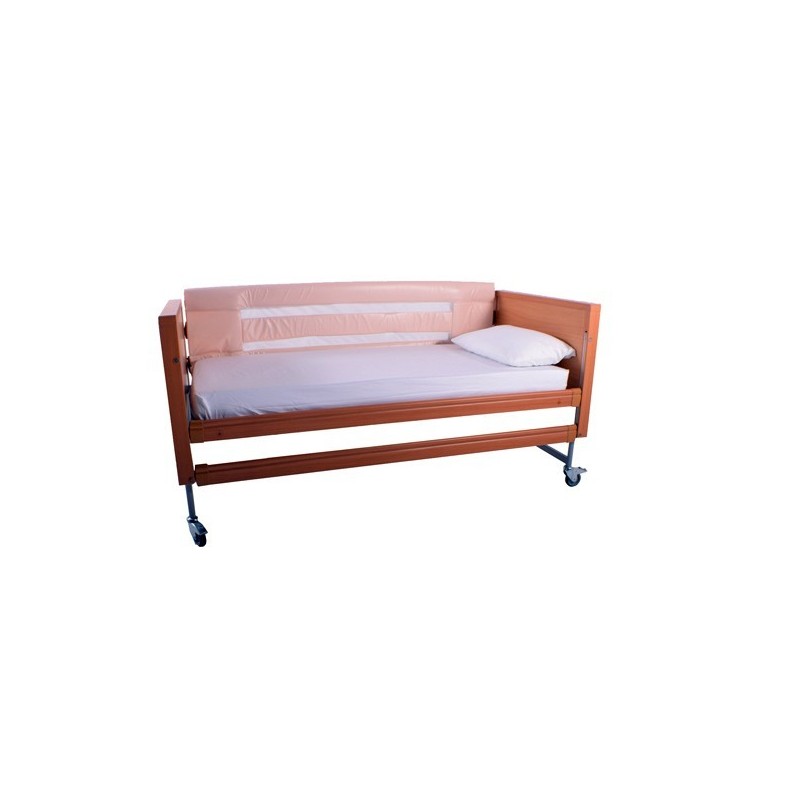


The Three-Rail Bumper with Net Window (220cm) is the extended-length model for profiling beds with three-rail configurations and longer side rail lengths. Padded protection at all three rail levels; breathable concertina net window for visibility and airflow; wipe-clean outer material; hook and loop fastenings; supplied in pairs. The standard 200cm version is NCL-CASA3R; rail length must be confirmed before procurement.
| Specification | Detail |
|---|---|
| Reference | NCL-CASA3R22 |
| Length | 220 cm |
| Configuration | Three-rail; third rail extension padded section |
| Net Window | Breathable; concertina |
| Outer Material | Wipe-clean |
| Fastening | Hook and loop |
| Supplied | In pairs |
| Standard Length | NCL-CASA3R (200cm) |
All regulatory obligations from MHRA bed rail safety guidance, CQC Regulation 12, and the Mental Capacity Act 2005 that apply to the 200cm three-rail version also apply to the 220cm version. The 220cm length must only be specified where rail measurement confirms this length; an oversized three-rail bumper that extends beyond the rail end cannot be fitted correctly and may not provide effective protection at the rail end point. The care home equipment register should record both the three-rail configuration and the rail length measurement for each bed requiring this specification, to support correct bumper length selection at procurement and replacement.
When should the 220cm three-rail version be specified rather than the 200cm?
The 220cm version (NCL-CASA3R22) should be specified where measurement of the three-rail bed side rail confirms a length greater than 200cm. Three-rail beds with extended rail lengths may be procured for taller residents or where the care home has specified extended-length profiling beds. Both the three-rail configuration and the 220cm rail length must be confirmed before procurement; fitting a 220cm three-rail bumper to a 200cm three-rail bed would result in an oversized bumper that does not fit correctly and may create a safety hazard at the rail end through excess material.
Is a separate risk assessment required for the three-rail configuration compared to a standard two-rail bed?
Yes. A three-rail configuration creates a higher overall rail structure that covers more of the resident's accessible bed surface; this changes both the potential benefits - greater containment - and the potential risks, including higher impact surfaces and potentially different entrapment zones at the additional rail level. MHRA guidance on bed rail safety should be applied to the specific three-rail configuration in use. CQC Regulation 12 documentation should record the clinical rationale for the three-rail configuration, the risk assessment findings, and the Mental Capacity Act 2005 best interest assessment where applicable.
