
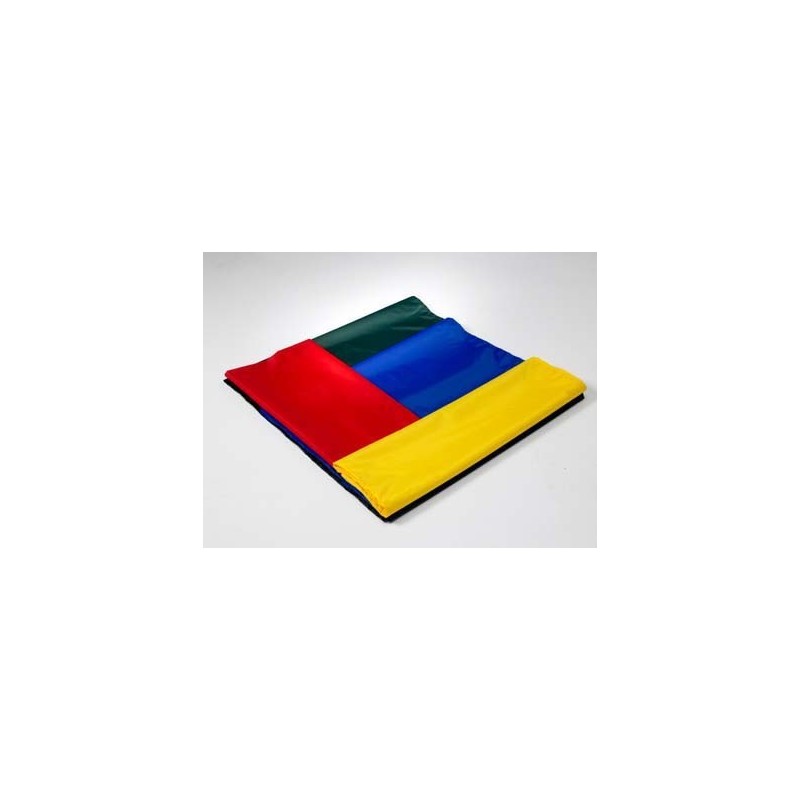


The Slide Sheet range provides silicon-coated nylon tubular sheets in six colour-coded sizes for safe, low-friction patient repositioning and transfer. Directly supports MHOR 1992 manual handling risk reduction for care staff. Reusable; available in small through extra-long extra-wide formats.
| Reference | Size | Dimensions | Colour |
|---|---|---|---|
| NCL-SSS | Small | 70 x 70 cm | Yellow |
| NCL-SSM | Medium | 120 x 70 cm | Blue |
| NCL-SSL | Large | 150 x 70 cm | Red |
| NCL-SSW | Wide | 125 x 100 cm | Green |
| NCL-SSEL | Extra Long | 75 x 200 cm | Burgundy |
| NCL-SSEWL | Extra Long, Extra Wide | 195 x 145 cm | Blue |
MHOR 1992 requires employers to assess manual handling operations and implement measures to reduce the risk of musculoskeletal injury to care staff; slide sheets are a documented control measure in the manual handling risk assessment for patient repositioning and transfer tasks. CQC Regulation 12 (safe care) inspections may assess whether appropriate manual handling equipment is available and used per the risk assessment. Each care home's manual handling policy should specify which slide sheet sizes are to be used for specific tasks and how slide sheets are to be laundered per the care home's infection control programme.
How do slide sheets reduce carer injury risk during patient repositioning?
Moving a patient in bed by direct contact requires the carer to overcome the friction between the patient's skin or clothing and the mattress surface - a significant force for heavier patients that places substantial load on the carer's back, shoulders, and arms. A slide sheet inserts a silicon-coated surface that slides freely between the patient and the mattress, reducing this friction to near zero; the force required to reposition the patient across the slide sheet is a small fraction of the direct-contact force. This reduction in required force is the primary mechanism by which slide sheets protect carer musculoskeletal health under MHOR 1992.
How is the correct slide sheet size selected for a repositioning task?
The slide sheet size should be selected based on the task being performed and the patient's dimensions. Small and medium sheets suit repositioning of the upper body or smaller patients. Large sheets cover the full torso for full-length repositioning. Wide sheets provide coverage for broader patients or bariatric care. Extra-long sheets suit lateral transfers along the full bed length. Extra-long extra-wide sheets cover the full body for larger patients or complex transfers. The care home manual handling risk assessment should specify the appropriate sheet size for each handling task, and carers should be trained in correct slide sheet technique as part of the manual handling training programme.
