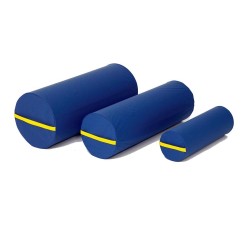
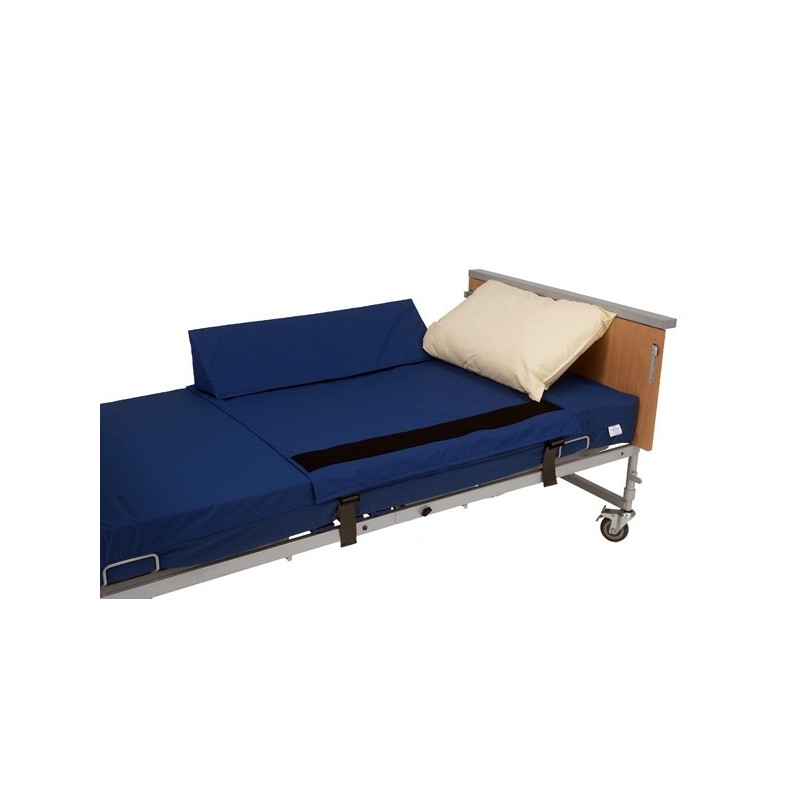

The Side Wedges System provides fall prevention without physical bed rails, using a vapour-permeable wipe-clean draw sheet attached to the mattress via quick-release buckles, with 20cm high foam wedges fastened to both sides. The less restrictive alternative to bed rails under the Mental Capacity Act 2005; preserves freedom of movement and dignity. Replacement components available separately across six accessory references.
| Specification | Detail |
|---|---|
| Reference | NCL-SW |
| Wedge Dimensions | 90 x 20 cm per wedge |
| Draw Sheet | Vapour-permeable, wipe-clean |
| Attachment | Quick-release buckles to mattress |
| Wedge Fastening | 10cm hook and loop strip each side |
| Includes | Draw sheet and wedges (complete set) |
| Accessories | NCL-WED, NCL-SWC, NCL-SWPU, NCL-SWFS, NCL-SWFS-W, NCL-SWD |
The Mental Capacity Act 2005 requires that any intervention restricting a person's freedom of movement must be the least restrictive option that achieves the safety objective. Bed rails constitute restraint in law for patients who lack capacity to consent; side wedges, which the patient can exit independently, represent a less restrictive fall prevention alternative that should be considered before bed rails are implemented. NICE NG45 (falls in older people) and NICE NG97 recommend considering bed rail alternatives where appropriate. CQC Regulation 10 (dignity) is supported by the system's preservation of resident movement and self-determination. CQC Regulation 12 (safe care) is supported by the fall prevention function. The bed safety risk assessment should document the consideration of alternatives before bed rails are selected.
When is a side wedge system clinically appropriate as a bed rail alternative?
Side wedges are appropriate where the bed safety risk assessment concludes that the primary risk is rolling out of bed rather than active entrapment or fall from a height, and where the resident retains sufficient awareness to respond to the wedge barrier or to exit the bed when they choose to. They are particularly indicated where bed rail use is identified as constituting restraint under the Mental Capacity Act 2005, or where the individual's dignity and freedom of movement are assessed as being significantly compromised by physical bed rails. The clinical team and occupational therapist should determine suitability based on the individual risk assessment and the resident's capacity, mobility, and behaviour during the night.
How is the draw sheet attached to the mattress and does this affect pressure care?
The draw sheet attaches to the mattress using quick-release buckles, positioned so the sheet lies flat on the mattress surface. The vapour-permeable material allows moisture vapour from the resident's skin to pass through, maintaining the skin microclimate consistent with NICE CG179 tissue viability guidance. The sheet does not significantly alter the pressure redistribution properties of the underlying mattress for most residents, but where a high-specification active pressure care mattress is in use, the tissue viability nurse should confirm compatibility before the draw sheet system is introduced, as the additional layer may affect the mattress's pressure mapping characteristics.