
- Currently Unavailable
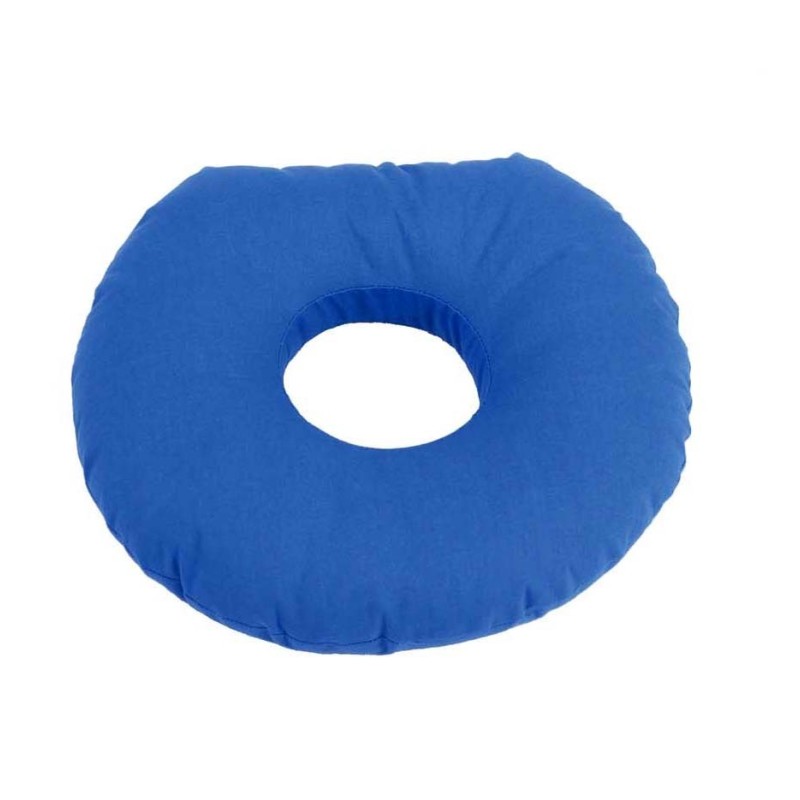

The NCL-FFCR ring cushion provides seated comfort for individuals experiencing coccygeal pain, haemorrhoidal discomfort, or post-surgical perineal discomfort. Hollow fibre fill provides a lightweight, soft seated surface, and the ring profile positions the coccyx and perineum over the central opening to reduce direct loading at the affected area during the seated period. The breathable cotton cover is suitable for everyday use in home, clinic, and care settings. This product is not a clinical pressure redistribution device and must not be used as a substitute for a pressure relief cushion where pressure injury risk has been identified.
| Specification | Detail |
|---|---|
| Shape | Ring (central opening for coccyx offloading) |
| Fill Material | Hollow fibre |
| Cover Material | Soft cotton |
| Reference | NCL-FFCR |
| Suitable Settings | Home, clinic, care environment |
| Clinical Indication | Coccyx, haemorrhoid, and post-surgical seated comfort |
| NICE CG179 Status | Contraindicated for pressure ulcer prevention - not a pressure redistribution device |
The NCL-FFCR ring cushion is a comfort product and is not a medical device for pressure ulcer prevention or treatment. NICE CG179 explicitly contraindicates ring and donut-shaped cushions for pressure ulcer management because the ring profile concentrates seated load onto the peripheral contact surface, elevating interface pressure and impairing vascular circulation at the ring boundary. This cushion must not be used for residents assessed at pressure risk; those residents require a clinically prescribed flat-profile pressure redistribution device following occupational therapist assessment. The cotton cover must be laundered regularly in line with the care setting's hygiene policy. For care home use, cover launderability should be confirmed against NHS IPC requirements applicable to the setting.
Who is the NCL-FFCR ring cushion clinically appropriate for?
The NCL-FFCR is appropriate for individuals who experience seated discomfort specifically at the coccyx or perineum as a result of coccydynia, haemorrhoidal disease, or post-surgical healing at the perineal or coccygeal site, and whose occupational therapist or clinician has confirmed that a ring profile is appropriate for their specific condition. It is suitable for use in home, community, or care settings for this comfort indication. It is not appropriate for any resident who has been assessed as being at risk of pressure ulceration or who has an existing pressure injury, as the ring profile would concentrate seated load at the peripheral tissue and potentially accelerate pressure injury development at those sites.
Can the cotton cover be laundered, and how should the cushion be maintained?
The cotton cover can be laundered in line with the care label guidance. Regular laundering is important to maintain hygiene, particularly if the cushion is in daily use for a resident with haemorrhoidal or post-surgical conditions where the seated skin surface may be moist or compromised. The cover should be checked before each use to confirm that the cotton fabric is intact with no tears or thinning at the seam; a damaged cover that cannot maintain its shape over the ring opening must be replaced. The hollow fibre fill maintains its profile under normal seated loads; if the fill becomes compacted and the central ring loses its defined shape, the cushion should be replaced. For care home use, the cushion should be resident-dedicated and the laundering frequency should be agreed with the setting's infection control lead.
