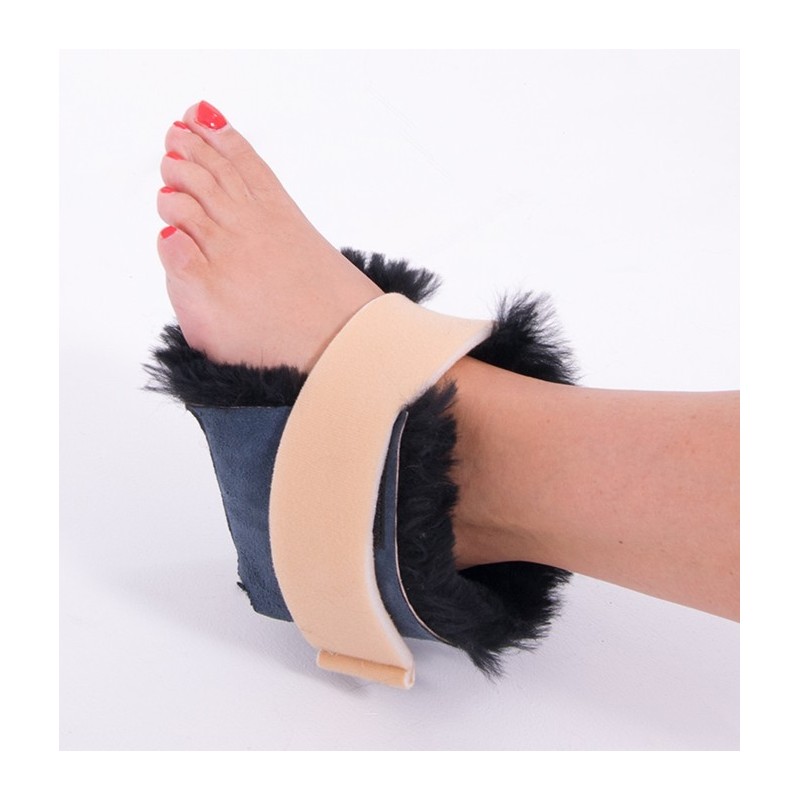


These real sheepskin heel and elbow protectors provide natural pressure redistribution, microclimate regulation, and moisture management at vulnerable bony prominences. Medical-grade genuine wool with natural lanolin supports skin integrity at the heel and elbow contact sites. Soft strapping with hook-and-loop fastening secures the protectors without limb compression, and the machine washable construction supports repeated use in care home, hospital, and homecare settings under NICE CG179 tissue viability guidance.
| Specification | Detail |
|---|---|
| Reference | NCL-SWHC |
| Material | Real sheepskin - medical grade |
| Protection Sites | Heel and elbow |
| Fastening | Soft strapping with hook-and-loop |
| Washing | Machine washable |
NICE CG179 identifies heels and elbows as high-risk pressure ulcer sites for individuals with limited mobility. The sheepskin wool fibres redistribute pressure across the contact surface, and the natural thermoregulatory and moisture-wicking properties directly support the NICE CG179 microclimate management principle. Genuine medical-grade sheepskin is accepted in NHS tissue viability practice as a pressure-redistributing heel and elbow protector. CQC Regulation 12 (safe care) documentation should include these protectors in the tissue viability section of the resident care plan, with clinical review at intervals specified by the tissue viability nurse or responsible clinician.
Is medical-grade sheepskin clinically equivalent to foam-based heel protectors?
Sheepskin and foam-based protectors operate through different mechanisms. Foam protectors redistribute pressure through structural compression; sheepskin redistributes pressure through fibre conformation and additionally manages microclimate through natural temperature and moisture regulation. NICE CG179 does not specify a preferred material; clinical selection should be based on individual assessment of pressure risk, skin condition, and resident tolerance. For complete heel offloading, the floating heel position achieved by aperture-based protectors may be more appropriate than either material.
Can these be used for elbow protection only?
Yes. The heel and elbow protectors can be applied independently to either site based on the individual resident assessment. Where elbow pressure risk is identified without heel risk, applying the protectors to the elbows only is clinically appropriate. The fastening and fit are designed to work at both sites. The tissue viability nurse should determine which sites require protection based on the Waterlow or Braden pressure risk assessment and the resident's individual mobility and care plan.