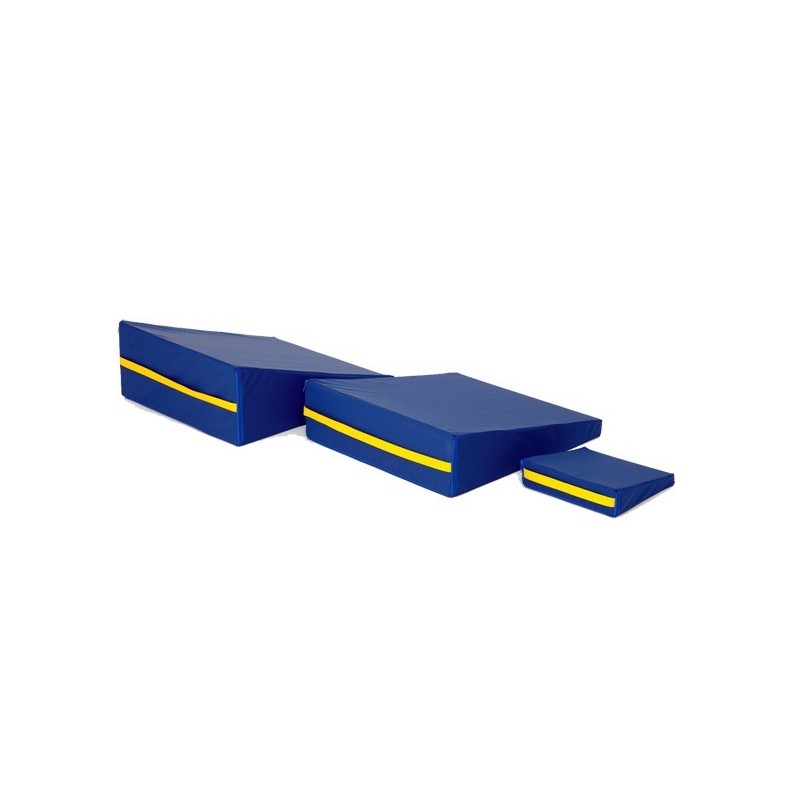

Prone Wedges support patients in the prone position during physiotherapy and rehabilitation, with combustion modified foam and a fire-retardant wipe-clean vapour-permeable cover. Three graduated sizes with carry straps. Suitable for hospitals, care homes, and homecare therapy settings.
| Reference | Length | Width | Height (taper) |
|---|---|---|---|
| NCL-PWS (Small) | 300 mm | 300 mm | 75 mm to 25 mm |
| NCL-PWM (Medium) | 650 mm | 600 mm | 175 mm to 50 mm |
| NCL-PWL (Large) | 650 mm | 600 mm | 250 mm to 50 mm |
The fire-retardant cover meets the Regulatory Reform (Fire Safety) Order 2005 fire safety requirements for soft furnishings used in care home and clinical settings. The vapour-permeable cover supports NICE CG179 microclimate management for patients at pressure ulcer risk who may be positioned prone as part of a pressure redistribution programme. CQC Regulation 12 (safe care) documentation should include the prone wedge as a component of the patient's physiotherapy or care plan, with the therapist confirming the clinical indication, the appropriate wedge size, and the maximum safe duration of prone positioning for the individual.
What clinical purposes does prone positioning on a wedge serve?
Prone positioning supports a range of physiotherapy and rehabilitation goals: facilitating head control and neck extension in patients with neurodevelopmental conditions; supporting weight-bearing through the arms and shoulders for upper limb strengthening; improving respiratory function by changing the distribution of lung ventilation in patients with respiratory conditions; redistributing pressure away from sacral and heel pressure points in the pressure ulcer prevention programme; and supporting postural extension in patients with flexion contracture tendencies. The therapist should document the specific clinical indication for prone positioning in the patient's treatment plan.
How are the three prone wedge sizes differentiated in clinical use?
The small wedge (NCL-PWS) is appropriate for paediatric patients or for targeted limb positioning where a small elevation angle is required. The medium wedge (NCL-PWM) provides a moderate elevation for standard adult trunk and upper limb support in prone positioning. The large wedge (NCL-PWL) provides the greatest elevation angle for adults requiring pronounced upper body elevation in the prone position, or for patients requiring a more significant postural challenge during therapy. The therapist should select the size based on the patient's body dimensions and the required angle for the specific therapeutic goal.