
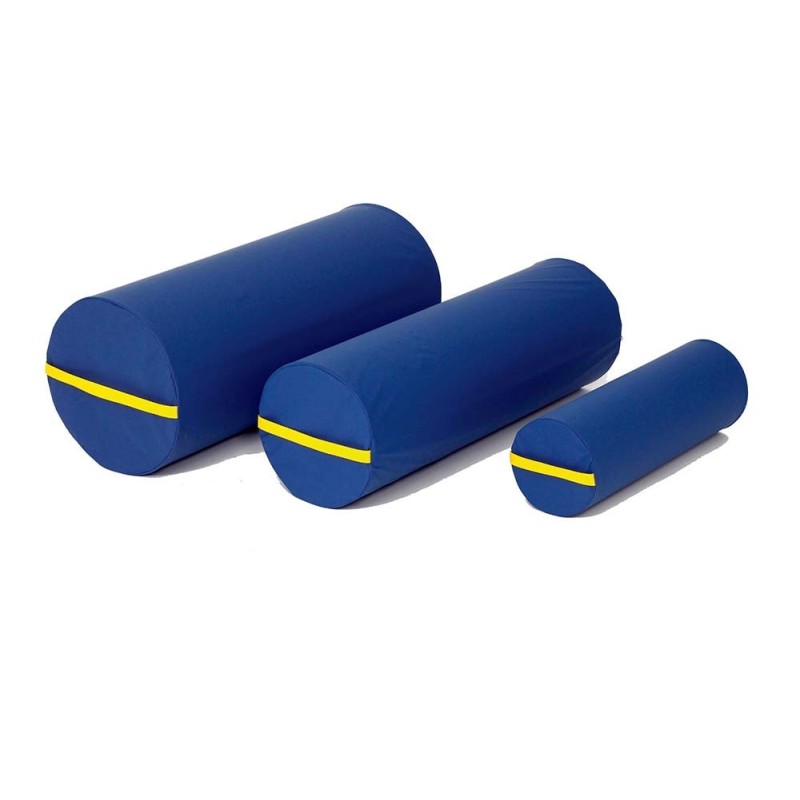

Postural Rolls provide a versatile cylindrical support for balance training, weight shifting, assisted rolling, and postural control in physiotherapy and rehabilitation. Combustion modified foam; fire-retardant wipe-clean vapour-permeable cover; carry strap. Three sizes: small (600x200mm), medium (900x300mm), large (900x375mm).
| Reference | Length | Diameter |
|---|---|---|
| NCL-PRS (Small) | 600 mm | 200 mm |
| NCL-PRM (Medium) | 900 mm | 300 mm |
| NCL-PRL (Large) | 900 mm | 375 mm |
The fire-retardant cover meets the Regulatory Reform (Fire Safety) Order 2005 fire safety requirements for clinical and care home settings. CQC Regulation 12 (safe care) documentation should include postural rolls within the physiotherapy or occupational therapy treatment plan where they are used in the care setting, with the therapist documenting the clinical indication, the therapeutic activities, and any contraindications for individual patients. The vapour-permeable cover specification supports skin microclimate management for patients who may rest body parts against the roll during therapy.
What therapeutic applications do postural rolls support?
Postural rolls are used across a broad range of therapeutic goals: lying over the roll in prone provides a dynamic chest and abdominal support for head lifting and arm weight-bearing; sitting astride the roll challenges dynamic sitting balance and core stability; rolling on the roll facilitates side-to-side weight shifting for balance training; positioning the roll under the knees or lumbar spine provides postural support in supine lying; and placing the roll under the ankles provides heel elevation for pressure relief. The roll's cylindrical form gives it greater versatility than fixed-angle wedge supports for dynamic and active therapeutic activities.
How do the three roll sizes differ in their therapeutic applications?
The small roll (NCL-PRS, 200mm diameter) is appropriate for paediatric patients or for localised support activities where a smaller diameter provides the appropriate therapeutic challenge; a smaller diameter creates a narrower, more challenging balance surface and a lower overall height. The medium roll (NCL-PRM, 300mm diameter) suits standard adult therapy activities and provides a moderately challenging balance surface. The large roll (NCL-PRL, 375mm diameter) provides a wider, more stable base appropriate for patients who need the greater stability during early-stage balance training, or for larger adults requiring a proportionate support surface. The therapist selects the roll size based on the patient's body dimensions, ability level, and the specific therapeutic goal.