
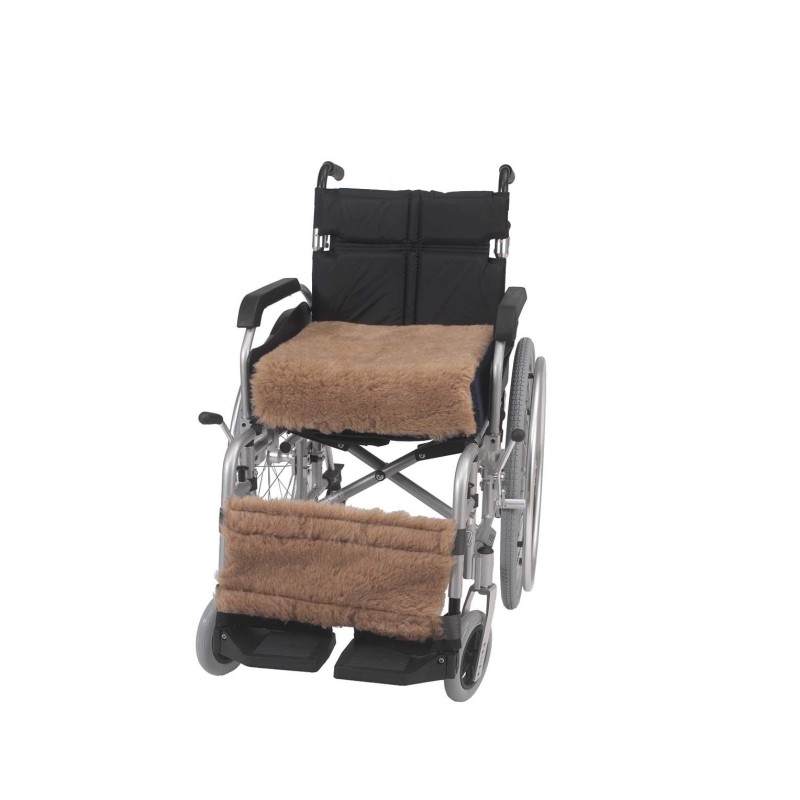

The Maximise Contour Cushion with 100% wool pile cover combines a combustion modified modular foam core with a natural wool outer cover providing passive temperature regulation and moisture management at the seated skin interface. The 43x41x10cm format matches the standard Maximise Contour dimensions, with the wool pile cover selected for residents where natural microclimate management is clinically preferred over a synthetic wipe-clean surface. Suitable for care home, community, and homecare settings following occupational therapist assessment per NICE CG179.
| Specification | Detail |
|---|---|
| Dimensions | 43 x 41 x 10cm |
| Foam Type | Combustion modified modular foam |
| Cover Material | 100% wool pile (machine washable - check care label) |
| Reference | NCL-MXCCW-(FCWT) |
| Fire Standard | BS7177 (combustion modified foam) |
| Regulatory Status | MDR 2017/745 Class I medical device |
| Clinical Standard | NICE CG179 (pressure redistribution) |
The Maximise Contour Cushion with wool pile cover uses combustion modified foam meeting the BS7177 institutional fire safety standard required for care home settings. As a Class I medical device under Medical Devices Regulation 2017/745, clinical selection requires occupational therapist assessment of pressure risk, thermal regulation needs, and skin condition. The wool pile cover must be laundered per care label instructions; laundering frequency must be determined by the care setting's infection control policy. Equipment register records and MDR conformity documentation must be retained for CQC Regulation 12 compliance.
Why choose a wool pile cover over a synthetic VP wipe-clean cover for pressure care seating?
The clinical case for the wool cover rests on its natural microclimate management properties rather than its pressure redistribution performance, which is determined by the foam core shared across all Maximise Contour variants. Wool actively absorbs moisture vapour and releases it into the environment, maintaining the microclimate between the cushion and the skin in a drier, more thermally stable state than a sealed VP cover. For residents who experience significant moisture at the seated skin surface from perspiration, fever, or poor thermoregulation, this moisture buffering reduces the maceration risk that is a known contributing factor to pressure injury development per NICE CG179. The wool option is therefore most clinically appropriate where the risk assessment identifies skin moisture as a specific contributing factor and where infection control constraints in the care setting permit a textile cover.
Is combustion modified foam required in a care home setting, and how does it differ from standard foam?
The Regulatory Reform (Fire Safety) Order 2005 and the BS7177 standard require that upholstered products used in care home and institutional settings use combustion modified foam that resists ignition and slows fire spread more effectively than standard foam. Combustion modified foam is treated during manufacture to inhibit ignition at lower temperatures and to produce lower quantities of toxic combustion products than untreated polyurethane foam. Standard household foam cushions do not meet the institutional fire safety requirement and represent a compliance gap during fire safety inspection. The wool pile cover on this variant is also naturally flame-resistant, providing a secondary surface fire safety benefit above the combustion modified core.
