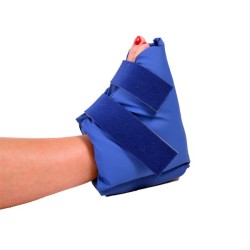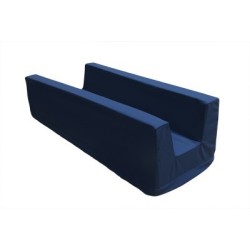
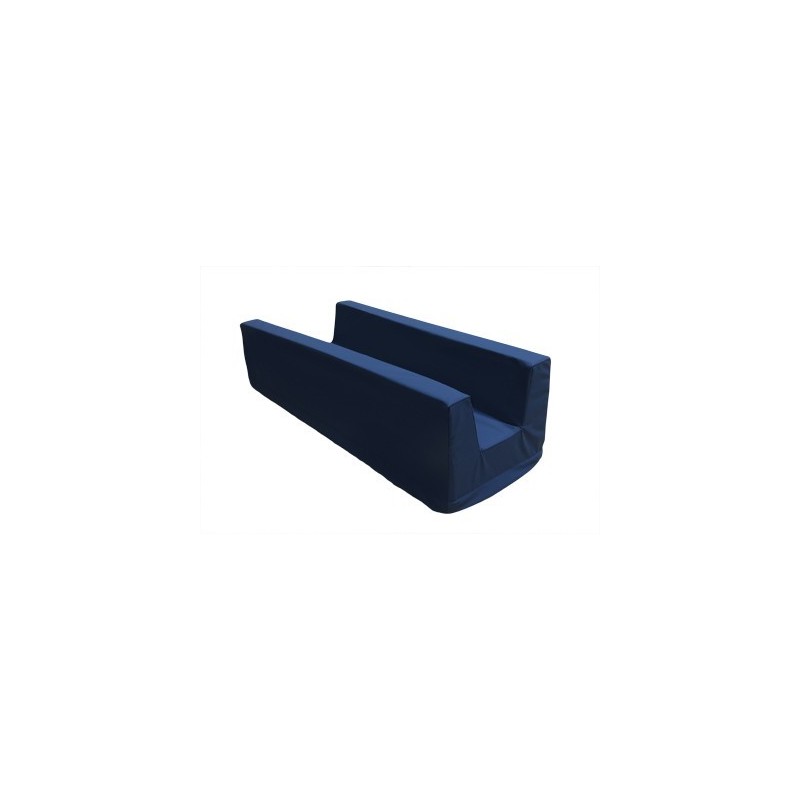

The Thorpe Mill Leg Trough THS-43 is a clinically developed, tapered U-shaped heel offloading device measuring 43x28x18cm, with a knee-to-ankle taper that provides slight knee flexion to help reduce DVT risk alongside heel pressure ulcer prevention. The combustion-modified polyurethane foam body is covered in a wipe-clean, multi-stretch, vapour-permeable fabric washable to 95°C. The THS-43 tapers from knee to ankle for improved anatomical fit, distinguishing it from the consistent-profile THS and the longer THS-61 models. Clinical assessment by a qualified healthcare professional is required before use.
| Specification | Detail |
|---|---|
| Reference | NCL-THS43 |
| Dimensions | 43 x 28 x 18 cm |
| Profile | Tapered knee to ankle |
| Additional Feature | Slight knee flexion - DVT risk reduction |
| Construction | Combustion-modified polyurethane foam |
| Cover | Wipe-clean, multi-stretch, vapour-permeable |
| Wash Temperature | Machine washable to 95°C |
| Origin | Designed and manufactured in the UK |
NICE CG179 and NICE QS89 specify complete heel suspension as the standard for effective pressure ulcer prevention. The THS-43 taper and slight knee flexion additionally address DVT risk by reducing sustained pressure on the popliteal vein at the posterior knee, which is a recognised risk factor for venous thromboembolism in immobile patients. The device should be used following professional clinical assessment and included in a documented tissue viability and venous risk management care plan per local policy. CQC Regulation 12 (safe care) documentation should record the clinical rationale for THS-43 selection over the THS standard model, the assessment date, and the inspection schedule. Cover should be washed at 95°C and matched to its original trough per HTM 01-04 linen management requirements.
What is the clinical relevance of the THS-43 knee flexion for DVT prevention?
The THS-43 tapers from knee to ankle so that the knee sits slightly higher than the ankle, creating mild knee flexion. This position reduces sustained compression of the popliteal vein at the posterior knee - a recognised risk factor for DVT in immobile, bed-bound patients. For patients assessed as having both heel pressure ulcer risk and venous thromboembolism risk, the THS-43 addresses both concerns in a single device. The clinical team should determine whether the degree of knee flexion is appropriate for the individual patient's vascular and orthopaedic status before use.
How does the THS-43 differ from the standard THS model?
The standard THS (NCL-THS, 43x22x20cm) maintains consistent dimensions throughout, providing a uniform support profile along the calf without knee flexion. The THS-43 (43x28x18cm) tapers from knee to ankle, providing slight knee flexion that helps reduce DVT risk in addition to heel offloading. Where DVT risk is not a clinical concern and uniform calf support is preferred, the THS is the appropriate choice. Where both heel pressure and venous risk require management, the THS-43 is indicated. The THS-61 offers the same tapered profile in a longer format for taller patients.