
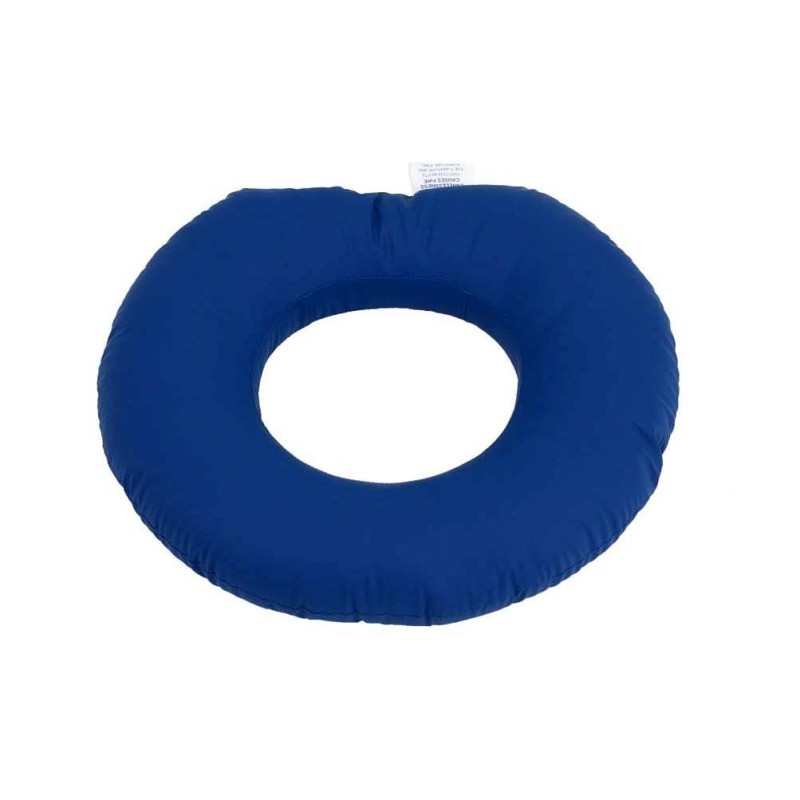

The NCL-FFWR ring-shaped commode cushion provides padded support at the peripheral seating surface while leaving the central perineal and coccygeal area pressure-free during commode use. Hollow fibre fill delivers comfort at the thigh and posterior contact surfaces surrounding the ring opening, and the ring profile is clinically indicated for residents with coccydynia, coccygeal pressure injury, or post-surgical perineal conditions where direct loading during the commode episode is contraindicated. The VP wipe-clean cover meets NPSA commode hygiene decontamination requirements, and hook-and-loop ties secure the cushion to the commode frame. Suitable for most standard commodes in care home, hospital, and community settings.
| Specification | Detail |
|---|---|
| Shape | Ring (central opening for coccyx and perineal offloading) |
| Fill Material | Hollow fibre |
| Cover Type | VP wipe-clean |
| Fastening | Hook-and-loop ties |
| Compatibility | Fits most standard commodes |
| Reference | NCL-FFWR |
| Clinical Indication | Coccygeal and perineal pressure offloading during commode use |
| CQC Relevance | Regulation 10 (dignity and comfort) |
The NCL-FFWR ring commode cushion supports compliance with NPSA commode hygiene guidance, requiring thorough decontamination of all commode equipment after each use. The wipe-clean VP cover enables disinfectant cleaning in line with the care setting's IPC policy. CQC Regulation 10 requires that dignity and comfort are maintained during personal care activities including commode use; for residents with coccygeal pain or active pressure injury, a ring cushion is a reasonable and expected clinical provision. The ring profile offloading indication must be documented in the resident's care plan by the prescribing clinician, with clinical rationale and expected outcome recorded for CQC inspection readiness. Cover integrity must be checked before each use.
When is a ring commode cushion clinically indicated compared to a U-shaped commode cushion?
The ring cushion and U-shaped cushion serve different clinical purposes. The U-shaped NCL-FFU provides comfort padding at the posterior and lateral seated surfaces during commode use without targeted pressure offloading at any specific anatomical site, and is appropriate as a comfort measure for residents without site-specific commode seating pain or injury. The ring-shaped NCL-FFWR is specifically indicated where the resident has pain, bruising, active pressure injury, or post-surgical healing at the coccyx or perineum that makes direct contact loading at those sites contraindicated or significantly distressing during the commode episode. The prescribing clinician must identify the specific anatomical site requiring offloading and confirm that the ring opening dimensions of the NCL-FFWR are sufficient to adequately unload that site for the individual resident before prescribing; the ring profile is not appropriate for residents who require padding at the posterior surface rather than offloading at the perineal and coccygeal midline.
Is a ring or donut-shaped cushion safe for general pressure injury prevention, or is it contraindicated for routine use?
Ring and donut-shaped cushions are specifically contraindicated for routine pressure injury prevention by NICE CG179. The clinical reason is that the ring profile, while offloading the central area, concentrates all seated weight onto the ring surface itself, creating significantly elevated pressure at the tissue surrounding the ring and impairing vascular circulation at those peripheral sites. NICE CG179 explicitly advises against the use of ring or donut cushions for pressure ulcer prevention because the peripheral pressure concentration can accelerate pressure injury development at the ring contact area. The NCL-FFWR is indicated only for the specific clinical purpose of coccygeal or perineal offloading during the commode episode, not for general seating or extended sitting. For general pressure injury prevention in the seated position, a flat-profile redistribution cushion from the Maximise range must be prescribed following occupational therapist assessment.
