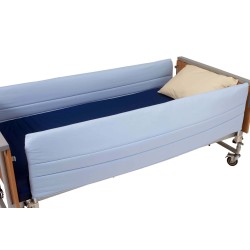
- Currently Unavailable
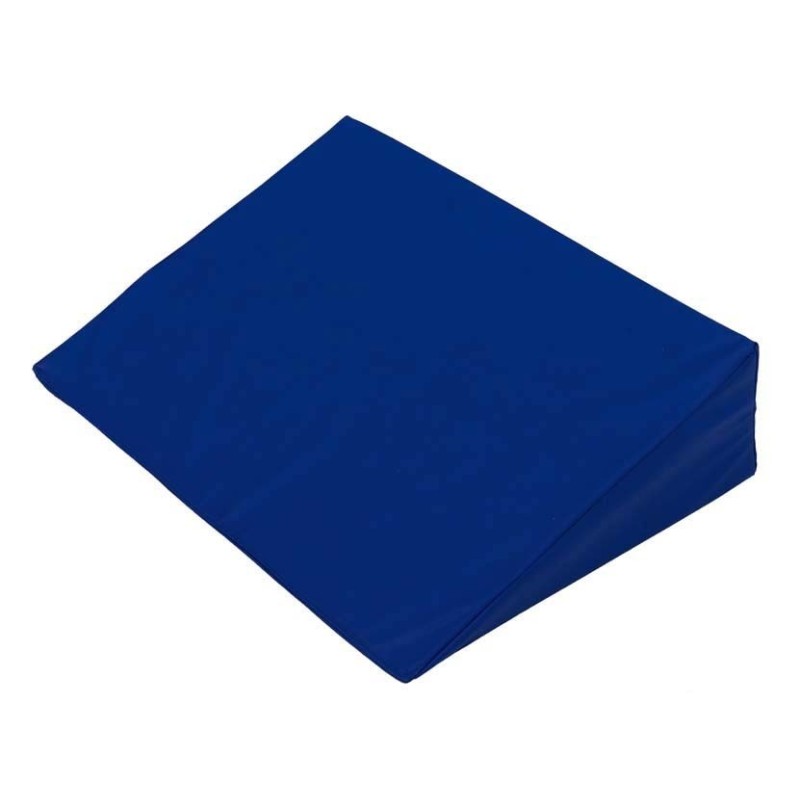

The Bed Wedge (NCL-FWS, 56x38x13cm) is the compact model suited for foot and lower leg elevation, prone positioning support, and comfort positioning. Polyurethane foam; vapour-permeable wipe-clean cover. Lightweight and repositionable. Larger backrest versions: NCL-FWL (610x610x300mm) and NCL-FWL22FR (560x560x230mm).
| Specification | Detail |
|---|---|
| Reference | NCL-FWS |
| Dimensions | 56 x 38 x 13 cm (22" x 15" x 5") |
| Foam | Polyurethane |
| Cover | Vapour-permeable, wipe-clean |
| Uses | Foot raiser; prone positioning; comfort support |
NICE CG179 supports limb elevation as a pressure redistribution measure for residents with lower limb pressure ulcer risk, and the vapour-permeable cover supports microclimate management at the elevated limb contact surface. CQC Regulation 10 (dignity and comfort) is supported by the wedge enabling independent repositioning for resident comfort. The responsible clinician should confirm the clinical indication for foot or leg elevation and the prescribed elevation angle before specifying the wedge in the care plan.
How does the NCL-FWS differ from the larger bed wedges in the range?
The NCL-FWS (56x38x13cm) is the smallest wedge in the range, with a modest 13cm elevation height suited to foot and lower leg elevation or low-angle prone support. The NCL-FWL (610x610x300mm) is a large backrest wedge with a 300mm height suited to sitting-up backrest and pillow-raising functions for the upper body. The NCL-FWL22FR (560x560x230mm) provides a 230mm backrest height with a washable cotton cover. The compact NCL-FWS is not suited as a backrest due to its limited dimensions; conversely, the larger wedges are too bulky for foot elevation use in the typical bed configuration.
Can the NCL-FWS be used for foot and heel elevation as part of a pressure care plan?
Yes, subject to the tissue viability nurse or responsible clinician confirming that foot elevation is appropriate for the individual resident's pressure care plan. NICE CG179 identifies the heel as a high-risk pressure ulcer site and supports elevation as part of the heel offloading strategy alongside protective heel devices such as the NCL-HPHC heel protectors. However, full heel offloading - where the heel is completely suspended above the mattress surface - requires a dedicated floating heel device such as the NCL-THS leg trough rather than a wedge, which continues to support the foot at an elevated angle but does not fully suspend the heel. The clinical team should confirm which approach is appropriate.