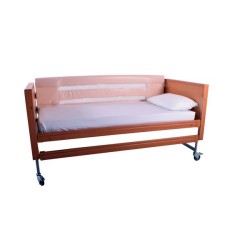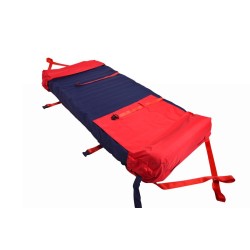


The Bed Wedge (NCL-FWL22FR, 560x560x230mm) provides postural and respiratory support with a soft fire-retardant cotton cover that is machine washable via three-sided zip. The cotton feel distinguishes it from the wipe-clean NCL-FWL. Indicated for residents using the wedge for extended periods where comfort against the cover material is a clinical and dignity consideration.
| Specification | Detail |
|---|---|
| Reference | NCL-FWL22FR |
| Dimensions | 560 x 560 x 230 mm |
| Foam | Supportive foam |
| Cover | Washable fire-retardant cotton; three-sided zip |
| Wipe-Clean Version | NCL-FWL (610 x 610 x 300 mm) |
The fire-retardant cotton cover meets the Regulatory Reform (Fire Safety) Order 2005 fire safety requirements for soft furnishings in care home bedrooms. Machine washability supports care home linen management per the infection control programme. CQC Regulation 10 (dignity) is directly supported by the soft cotton feel, particularly for residents using the wedge for extended periods during the day or overnight. NICE CG179 supports head of bed elevation as a pressure redistribution measure where sacral pressure is a documented risk, and the wedge's foam support maintains the prescribed angle throughout the elevated period.
What advantage does the washable FR cotton cover have over the wipe-clean version?
The cotton cover provides a softer, warmer, and more comfortable skin-contact surface than synthetic wipe-clean covers for residents who use the wedge as a backrest for extended periods. Wipe-clean covers use polyurethane-coated or similar synthetic materials that are effective for infection control but may feel cold or uncomfortable against the skin during long seated or semi-reclined use. The cotton cover can be machine laundered rather than wiped, providing thorough decontamination. The key trade-off is that the cotton cover cannot be wiped between uses in the same way as a wipe-clean cover; the care home infection control policy should specify the laundering frequency appropriate for the cotton cover's use pattern.
When is respiratory positioning with a bed wedge clinically beneficial?
Elevating the head of the bed using a wedge can benefit residents with several respiratory conditions: reducing the work of breathing for residents with chronic obstructive pulmonary disease or heart failure where gravitational fluid redistribution improves respiratory function in the upright position; reducing gastro-oesophageal reflux and aspiration risk during and after feeding for residents with dysphagia or reflux; and supporting oxygen delivery by maintaining the chest at an angle that optimises respiratory mechanics. The responsible clinician should prescribe the appropriate head elevation angle and the duration for which it should be maintained; the wedge specification should be chosen to provide the prescribed angle stably throughout the prescribed period.