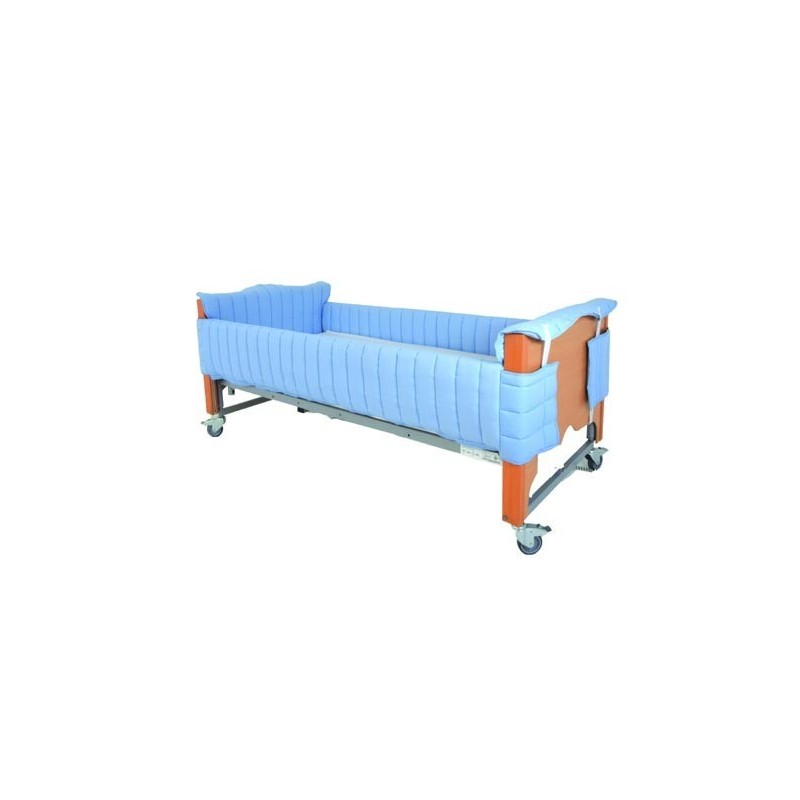

The Connected All Round Protection bed rail covers include all features of the standard version (NCL-MWARP) plus a linked sheet that closes the gap between the bed rail and the bed frame, directly addressing the limb entrapment risk identified in MHRA bed rail safety guidance. Heavily quilted padded covers for side rails, headboards, and footboards; breathable fabric; closed corners; machine washable. The connected version is indicated where the bed and rail configuration creates an entrapment gap identified in the bed rail risk assessment.
| Specification | Detail |
|---|---|
| Reference | NCL-MWCARP |
| Coverage | Side rails, headboards, footboards, and rail-to-frame gap |
| Key Addition | Linked sheet closes gap between rail and bed frame |
| Construction | Heavily quilted |
| Fabric | Breathable |
| Washing | Machine washable |
| Standard Version | NCL-MWARP (without linked sheet) |
MHRA guidance (MDA 2001/21 and NHS/PSA/W/2017/005) identifies limb entrapment between bed rails and the bed frame as a serious patient safety risk associated with preventable fatalities. The connected linked sheet directly mitigates the gap entrapment zone for the fitted bed configuration. CQC Regulation 12 (safe care) requires that identified patient safety risks are managed with documented control measures; where the bed rail risk assessment identifies a gap entrapment risk, specifying the connected version and documenting its use forms part of the compliant risk management record. The Mental Capacity Act 2005 best interest obligations apply to the decision to use bed rails regardless of which cover version is fitted.
How does the linked sheet prevent limb entrapment between the rail and frame?
The linked sheet bridges and fills the gap between the lower edge of the bed rail and the top of the bed frame or mattress surface, creating a continuous covered surface with no accessible gap through which limbs could pass during sleep or movement. MHRA guidance identifies the rail-to-frame gap as one of seven defined entrapment zones in standard bed configurations. The linked sheet is secured to both the rail cover and the bed frame to maintain its position during patient movement, ensuring the gap remains closed throughout the night.
Is this version compatible with all hospital and care home bed types?
The connected version is designed for standard hospital and care home bed configurations. Before specifying, the bed and rail dimensions should be assessed to confirm the linked sheet adequately covers the gap in the specific configuration in use. For profiling beds, adjustable beds, or beds with non-standard rail and frame dimensions, a physical fitting check is recommended to confirm the gap is fully closed by the linked sheet before the bed is returned to use. The MHRA guidance on bed rail entrapment zones provides a framework for assessing entrapment risk in specific bed configurations.