
- Currently Unavailable
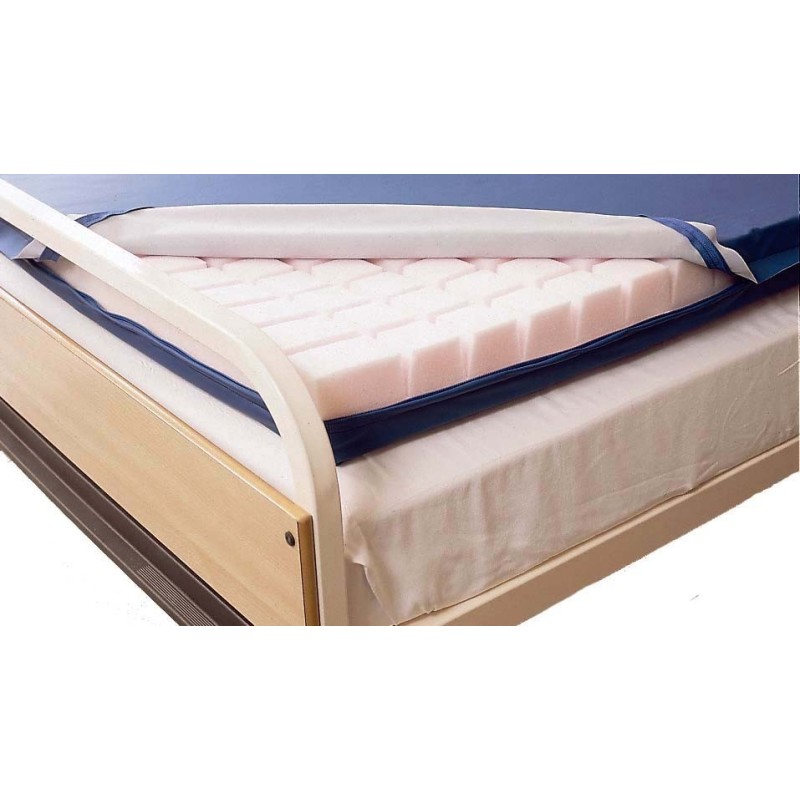

The Anti-Pressure Mattress Overlay (Double Bed, NCL-PFD) provides castellated foam pressure redistribution for double bed configurations in homecare and residential settings. 200x137x9cm; wipe-clean vapour-permeable removable cover; modular foam pad and cover options. Single bed version is NCL-PFS (190x87x9cm). NICE CG179 indicated.
| Specification | Detail |
|---|---|
| Reference | NCL-PFD |
| Dimensions | 200 x 137 x 9 cm (double bed) |
| Foam | High-specification castellated |
| Cover | Wipe-clean, vapour-permeable; fully removable |
| Single Bed Version | NCL-PFS (190 x 87 x 9 cm) |
The same NICE CG179 pressure ulcer prevention rationale, MDR 2017/745 medical device classification, and tissue viability risk assessment requirements applicable to the single bed version (NCL-PFS) apply to the double bed version. For double bed users, the tissue viability nurse should confirm the castellated overlay provides adequate pressure redistribution across the full double bed width for the individual resident's risk level. The wider double bed format means the resident may occupy any position across the width; the full 137cm coverage ensures pressure redistribution is available across the complete sleeping surface.
When should the double bed overlay be specified rather than a single bed version?
The double bed overlay (NCL-PFD) should be specified when the resident at pressure ulcer risk uses a double or king-size bed in their home or care setting, rather than a single profiling bed. Homecare residents often use their own double beds, and a single bed overlay would only cover part of the sleeping surface. The full 200x137cm coverage of the double overlay ensures pressure redistribution is available regardless of where the resident sleeps on the double bed width. Where the resident will be using a single care home profiling bed, the 190x87cm single version (NCL-PFS) is the appropriate specification.
Is the double overlay suitable for bariatric residents?
The suitability of the anti-pressure overlay for bariatric residents depends on the individual resident's weight, the underlying mattress's support capacity, and the tissue viability risk assessment findings. The overlay is a 9cm castellated foam pad added to an existing mattress; for bariatric residents where the underlying mattress must provide structural support for higher body weights, a purpose-specified bariatric pressure care mattress such as the Optimise Support (NCL-OPS) may be more appropriate than an overlay on a standard mattress. The tissue viability nurse and bariatric care specialist should advise on the appropriate pressure care specification for heavier residents.
