
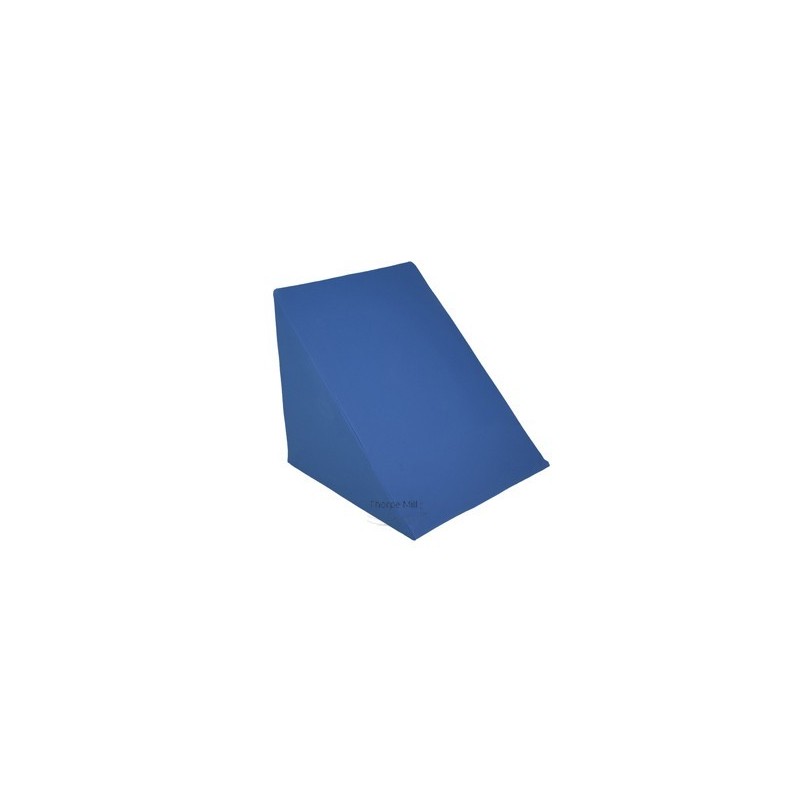

The 45-Degree Bed Wedge (NCL-FWL1818, 460x460x460mm) provides a precise 45-degree elevation angle in an equilateral triangular profile for use as a backrest, pillow raiser, or leg support. Polyurethane foam; vapour-permeable wipe-clean cover. Lightweight and multi-orientation. Larger backrest version is NCL-FWL (610x610x300mm).
| Specification | Detail |
|---|---|
| Reference | NCL-FWL1818 |
| Dimensions | 460 x 460 x 460 mm |
| Angle | 45 degrees |
| Foam | Polyurethane |
| Cover | Vapour-permeable, wipe-clean |
| Uses | Backrest; pillow raiser; leg support |
CQC Regulation 10 (dignity and comfort) is supported by the wedge enabling comfortable, supported positioning for eating, reading, and resting. Where the 45-degree elevation angle is clinically prescribed - for example, for post-operative respiratory management or dysphagia care - the responsible clinician should document the prescribed angle in the care plan. The vapour-permeable cover supports NICE CG179 microclimate management for residents using the wedge as a prolonged contact surface. CQC Regulation 12 (safe care) applies where the wedge is used as a clinical aid for a specific medical condition requiring elevation.
What is the clinical value of a 45-degree angle specifically?
Many clinical positioning protocols specify a 45-degree head of bed elevation as a target: intensive care guidelines for ventilator-associated pneumonia prevention recommend 30-45 degree head elevation; dysphagia management protocols often specify a defined elevation angle to reduce aspiration risk during and after feeding; post-operative recovery protocols for thoracic and abdominal surgery may prescribe a specific elevation angle for respiratory mechanics. A fixed 45-degree wedge provides a consistent, measurable angle that can be documented in the care plan and verified by care staff, unlike pillow stacking which provides a variable and unmeasurable elevation angle.
When should the NCL-FWL1818 be chosen over the larger NCL-FWL?
The NCL-FWL1818 (460x460x460mm) provides a precise 45-degree elevation in a more compact format than the NCL-FWL (610x610x300mm). The NCL-FWL1818 is appropriate where the 45-degree angle is the specific clinical requirement and the smaller contact area is adequate for the resident's back support needs. The NCL-FWL is appropriate where the larger surface area provides better back coverage for the individual resident, and where the specific angle is less clinically prescribed than the general backrest function. For residents who use the wedge as a leg raiser in addition to a backrest, the equilateral NCL-FWL1818 can be repositioned for each purpose without requiring a second wedge.
