
Pulse Oximeters
Pulse oximeters for SpO2 oxygen saturation and pulse rate monitoring in care homes and NHS settings, supporting NEWS2 vital signs assessment and respiratory deterioration detection, ISO 80601-2-61 compliant and MHRA registered.
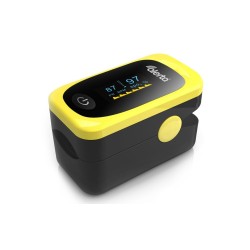
Pulse Oximeters for SpO2 Monitoring and NEWS2 Vital Signs Assessment
Clinical Summary: Pulse oximeters measure peripheral oxygen saturation (SpO2) non-invasively using photoplethysmography, providing a key parameter in NHS NEWS2 early warning score assessment and respiratory deterioration monitoring in care homes and NHS settings. Accurate SpO2 monitoring enables early detection of hypoxia before symptoms are clinically apparent, supporting timely clinical escalation under care home deterioration detection protocols. Pulse oximeters must meet ISO 80601-2-61 accuracy standards and carry MHRA registration for clinical use.
Pulse Oximeter Types
- Fingertip Pulse Oximeters: Compact clip-on fingertip devices providing SpO2 and pulse rate readings within seconds, the most widely used oximeter format in care homes for routine NEWS2 vital signs monitoring, spot checks, and respiratory condition monitoring due to low cost and ease of use.
- Handheld Pulse Oximeters: Clinical-grade handheld oximeters with probe cable attachment providing accurate SpO2 measurement for care home and clinical environments where greater accuracy, memory storage, and durability are required than fingertip devices provide, with Bluetooth connectivity options for EPR integration.
- Paediatric and Neonatal Probes: Wrap-around and clip probes in paediatric and neonatal sizes for accurate SpO2 measurement in infants and children where adult fingertip clip probes would not achieve reliable sensor contact due to digit size differences. Probe selection is critical for measurement accuracy in paediatric monitoring.
- Wrist and Continuous Monitoring Oximeters: Wrist-worn continuous SpO2 monitoring devices for overnight sleep screening, chronic respiratory condition monitoring, and care home residents requiring sustained SpO2 surveillance without nursing staff attendance for each measurement.
Clinical Compliance and SpO2 Monitoring Standards
Pulse oximeters supplied by Care Supplies carry MHRA registration and comply with ISO 80601-2-61, the international accuracy standard for pulse oximeters, requiring SpO2 measurement accuracy of plus or minus 3 percentage points between 70 and 100 percent saturation against arterial blood gas co-oximetry reference. NHS NEWS2 guidance specifies SpO2 as a core vital signs parameter with distinct scoring scales for Scale 1 (normal respiratory target) and Scale 2 (COPD patients with hypercapnic drive), and care home staff should be trained in the correct NEWS2 scale for each resident with documented rationale. Nail varnish, cold peripheral circulation, and movement artefact are principal sources of inaccurate pulse oximeter readings and should be managed before recording NEWS2 SpO2 values.
| Oximeter Type | Primary Application | Key Feature | Key Standard |
|---|---|---|---|
| Fingertip | Routine NEWS2, spot checks | Compact, immediate, low cost | ISO 80601-2-61 / MHRA |
| Handheld Clinical | Clinical-grade monitoring, EPR | Memory, Bluetooth, durable | ISO 80601-2-61 / MHRA |
| Paediatric Probes | Infant and child SpO2 monitoring | Paediatric probe size | ISO 80601-2-61 / MHRA |
| Wrist Continuous | Overnight and continuous monitoring | Sustained surveillance | ISO 80601-2-61 / MHRA |
Frequently Asked Questions
Q: What SpO2 level should trigger escalation in a care home resident?
A: Under NHS NEWS2 scoring, an SpO2 of 95 to 96 percent scores 1 point on Scale 1, 93 to 94 percent scores 2 points, and 92 percent or below scores 3 points. For COPD patients on NEWS2 Scale 2, the target range is 88 to 92 percent, with 93 to 94 percent scoring 1 point. Care home escalation protocols typically trigger GP or 999 contact at a total NEWS2 score of 5 or above, or any single parameter score of 3. Local care home deterioration protocols should specify the exact escalation threshold.
Q: Can nail varnish affect pulse oximeter readings?
A: Yes. Dark nail varnish, particularly blue, green, and black shades, can interfere with pulse oximeter light transmission and produce falsely low SpO2 readings. Nail varnish should be removed from the finger being used for monitoring before recording NEWS2 SpO2 values, or an alternative digit without nail varnish used. Acrylic nails can also affect probe contact and signal quality. If nail varnish cannot be removed, document this alongside the reading and consider using the earlobe with an appropriate probe as an alternative site.