
Medical Nebulisers
Medical nebulisers in jet, mesh, and ultrasonic formats for aerosolised drug delivery in asthma, COPD, and respiratory condition management in care homes, clinics, and domiciliary settings, MHRA registered for clinical nebulisation use.
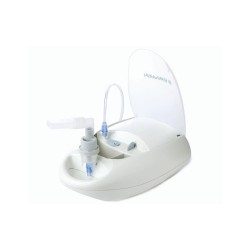
Medical Nebulisers for Respiratory Drug Delivery and Treatment
Clinical Summary: Medical nebulisers convert liquid medication into a fine aerosol mist for inhalation directly into the lower respiratory tract, providing an effective drug delivery route for patients unable to use conventional inhalers due to cognitive impairment, severe breathlessness, or coordination difficulties. They are used in care homes, clinics, and domiciliary settings for bronchodilator delivery in acute asthma exacerbations, COPD management, and mucolytic treatment under NICE CG141 and NICE NG115 respiratory guidelines.
Medical Nebuliser Types
- Jet Nebulisers: Compressor-driven jet nebulisers generating aerosol mist by directing compressed air through liquid medication in the nebuliser chamber, providing reliable drug delivery for bronchodilators, corticosteroids, and antibiotics in care home and clinic settings at low equipment cost.
- Mesh Nebulisers: Vibrating mesh technology nebulisers producing a fine, consistent particle size aerosol through a vibrating mesh plate without a compressor, providing quiet, portable, and efficient drug delivery with shorter treatment times and lower residual drug volume than jet systems. Preferred for domiciliary and travel use due to compact size and battery operation.
- Ultrasonic Nebulisers: High-frequency ultrasonic vibration nebulisers producing aerosol from a water bath, suited to saline nebulisation and humidification applications but not recommended for heat-sensitive medications including suspensions and proteins.
- Paediatric Nebuliser Systems: Nebuliser systems with child-appropriate masks, lower flow rates, and paediatric medication chambers for bronchodilator delivery in children with asthma or respiratory conditions in paediatric ward and domiciliary settings.
Clinical Compliance and Respiratory Treatment Standards
Medical nebulisers supplied by Care Supplies carry MHRA registration as Class IIa medical devices and comply with relevant nebuliser performance standards. NICE CG141 (asthma) and NICE NG115 (COPD) provide evidence-based guidance on nebulised drug delivery indications, and nebuliser prescription should reflect these guidelines with documented clinical rationale in the resident care plan. Nebuliser masks and chambers are single-patient and should be replaced according to manufacturer intervals, typically every three to six months with regular cleaning between uses. Compressor filters should be replaced according to the manufacturer maintenance schedule, with documented maintenance records retained for CQC inspection.
| Nebuliser Type | Technology | Primary Application | Key Standard |
|---|---|---|---|
| Jet Nebuliser | Compressed air compressor | Clinic, care home, acute use | MHRA / NICE CG141 |
| Mesh Nebuliser | Vibrating mesh | Domiciliary, portable, travel | MHRA / NICE CG141 |
| Ultrasonic Nebuliser | Ultrasonic vibration | Saline and humidification | MHRA |
| Paediatric System | Jet or mesh with paed mask | Children with asthma or respiratory conditions | MHRA / NICE CG141 |
Frequently Asked Questions
Q: When is a nebuliser indicated instead of an inhaler for COPD or asthma?
A: Nebulisers are indicated when a patient is unable to use an inhaler effectively due to severe breathlessness, cognitive impairment preventing correct inhaler technique, or coordination difficulties. NICE NG115 (COPD) recommends that nebulised bronchodilators are used for acute exacerbations in hospital and for patients whose symptoms are inadequately controlled by inhalers despite optimal technique and device selection. Care homes should document the clinical rationale for nebuliser use in the resident care plan.
Q: How should nebuliser masks and chambers be cleaned and replaced?
A: Nebuliser masks and chambers are single-patient items that should be cleaned after each use by washing in warm soapy water, rinsing thoroughly, and air drying before storage. They should be replaced every three to six months depending on manufacturer guidance, or sooner if visible deterioration is noted. Compressor air filters should be replaced according to the manufacturer schedule to maintain correct airflow and drug delivery performance. All maintenance should be documented.