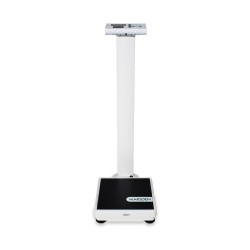
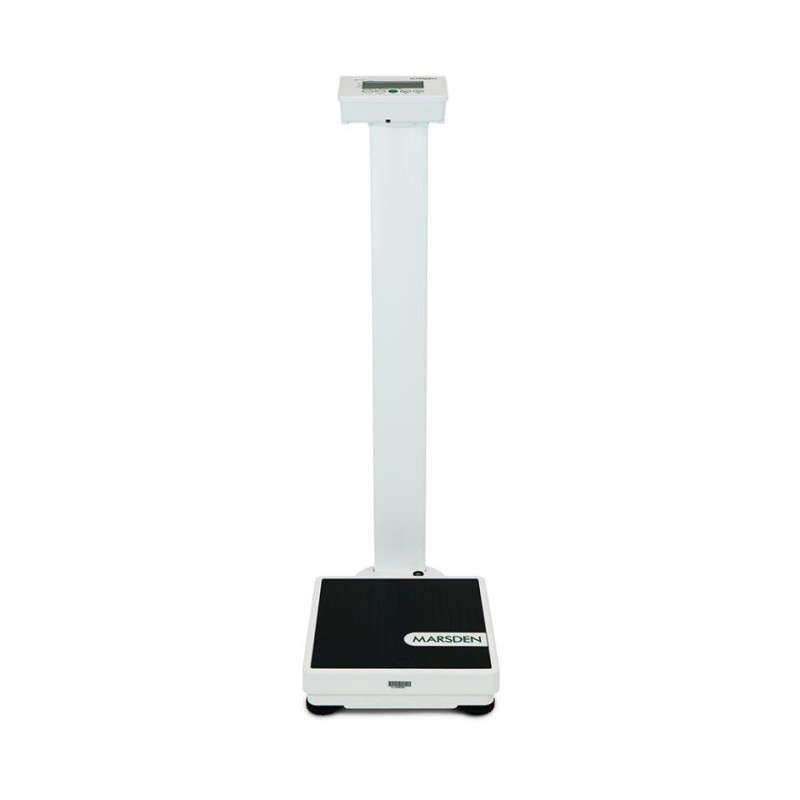


The Marsden M-125 is Marsden's most affordable Class III and MDR Approved column scale, providing the essential clinical weighing functions required by NHS GP surgeries, health centres and outpatient departments without the premium cost of the M-100 or M-110. With 250kg capacity, BMI and BSA calculation as standard, and 180 hours of battery operation from 6xAA batteries, the M-125 covers the core clinical weight monitoring requirements for general practice and outpatient settings, with BSA calculation extending its clinical relevance to oncology, renal and other specialist pathways where body surface area is a required clinical measurement.
MDR (Medical Device Regulation) approval alongside Class III certification satisfies NHS trust procurement frameworks that mandate MDR compliance for column scales used in clinical diagnostic settings.
| Specification | Detail |
|---|---|
| Capacity | 250kg |
| Approval | Class III and MDR Approved (NAWI Directive) |
| Functions | BMI, BSA (DuBois formula), Hold, Tare |
| Display | 3cm LCD, column-mounted at waist height |
| Keypad | 5-button operation |
| Battery Life | 180 hours (6 x AA batteries, mains adaptor supplied) |
| Warranty | 8 years |
Class III and MDR approval confirm the M-125 meets NAWI Directive precision standards and EU Medical Device Regulation requirements for clinical diagnostic use. BSA calculation via the DuBois formula is a standard function without additional configuration, supporting NHS oncology ward use where many chemotherapy regimens dose by BSA rather than BMI, and renal unit use where BSA is a component of dialysis adequacy calculations. The waist-height column-mounted display eliminates the bending required to read floor-level indicators, reducing repetitive back strain for clinical staff in high-frequency weighing environments and supporting NHS Moving and Handling Policy for clinical equipment design.
What is the clinical difference between BSA and BMI, and why does the M-125 calculate both?
BMI (Body Mass Index) is calculated from weight and height (kg/m²) and is the standard metric for obesity assessment in NICE guidelines and general practice. BSA (Body Surface Area) calculates the estimated total surface area of the human body in square metres and is the preferred metric for drug dosing in oncology and for several renal calculations, as drug distribution correlates more accurately with body surface area than body weight alone for many chemotherapy agents. The M-125 calculates both from a single weighing episode (height entered via the keypad, weight captured on the scale), providing both metrics without a second measurement or separate calculation tool.
Is the M-125 suitable for NHS settings where a height measure is also required?
The M-125 calculates BMI and BSA from the height entered manually via its keypad, but does not include an integrated height measure. Height must be measured separately using a wall-mounted stadiometer or a portable height measure such as the HM-250P or HM-201M, and then entered into the M-125 indicator. For clinical settings requiring an all-in-one weight and height measuring unit, the M-110 or M-100 with an integrated height measure option are the appropriate specifications. The M-125 suits settings where height is already measured separately or where the scale is used primarily for weight monitoring rather than complete BMI assessment at every consultation.
Part of our Class III approved Medical Scales and Measuring range. Medical column scales combine height and weight measurement for comprehensive patient assessment in care homes and NHS environments.