
Medical Chair Scales
Medical chair scales for seated patient weighing in care homes and NHS settings, Class III approved for non-ambulant patients with limited standing ability, eliminating transfer risk while providing accurate clinical weights for medication dosing and nutrition monitoring.
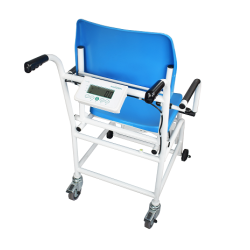
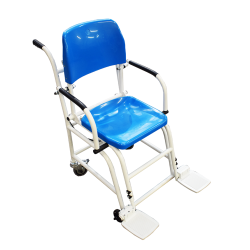
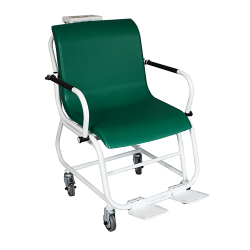
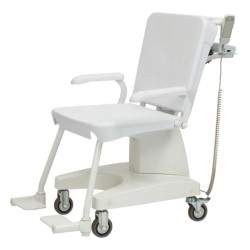
Medical Chair Scales for Safe Seated Patient Weighing
Clinical Summary: Medical chair scales provide accurate patient weights without requiring the patient to stand, eliminating transfer risk and manual handling burden for non-ambulant care home residents, post-operative patients, and individuals with limited lower limb strength or balance. All chair scales for clinical medication dosing must carry Class III approval under the Non-Automatic Weighing Instruments Regulations 2016.
Medical Chair Scale Types
- Fixed Chair Scales: Dedicated weighing chairs with integrated load cells providing accurate seated weights in a stable, purpose-designed seating platform. Suited to care homes and hospital wards with high volumes of non-ambulant patients requiring regular weighing. Class III approved for medication dosing and clinical record use.
- Folding and Portable Chair Scales: Lightweight folding chair scales for community and domiciliary use, enabling accurate seated weighing during home visits by community nurses, dietitians, and health visitors without fixed equipment installation.
- Bariatric Chair Scales: High-capacity chair scales rated from 300kg for bariatric patient management, with reinforced construction and wider seating dimensions supporting larger body profiles during seated weighing.
- Wheelchair Accessible Chair Scales: Chair scales with removable footrests and armrests enabling transfer from wheelchair to weighing chair with minimal patient movement, supporting safe weighing for patients with significant mobility limitations.
Clinical Compliance and Manual Handling Standards
Medical chair scales supplied by Care Supplies carry Class III approval under the Non-Automatic Weighing Instruments Regulations 2016 and MHRA registration where applicable. Chair scales reduce manual handling risk associated with transferring non-ambulant patients to standing floor scales, supporting Manual Handling Operations Regulations 1992 compliance for care staff. Tare function enables weighing with clothing in place. CQC inspections of care homes assess whether appropriate equipment is available for all residents requiring clinical weighing, and chair scales are an expected provision where a significant proportion of residents are non-ambulant.
| Chair Scale Type | Capacity | Primary Application | Key Standard |
|---|---|---|---|
| Fixed Chair Scale | Up to 250kg | Care home, ward, high-volume use | Class III / NAWI 2016 |
| Folding Chair Scale | Up to 200kg | Community, domiciliary, portable use | Class III / NAWI 2016 |
| Bariatric Chair Scale | 300kg and above | Bariatric patient management | Class III / MHRA |
Frequently Asked Questions
Q: When should a care home use a chair scale instead of a floor scale?
A: Chair scales are indicated for residents who are unable to stand safely on a floor scale due to limited mobility, balance impairment, lower limb weakness, or fall risk. Requiring a non-ambulant resident to stand on a floor scale creates unnecessary manual handling and fall risk. CQC expects care homes to have appropriate weighing equipment for all resident mobility levels.
Q: Are medical chair scales accurate enough for medication dosing?
A: Yes, provided the chair scale carries Class III approval under the Non-Automatic Weighing Instruments Regulations 2016. Class III approval confirms the accuracy performance required for medication dosing applications in UK clinical settings. Always verify Class III approval before purchasing a chair scale for medication dosing use in a care home or NHS environment.