
Medical Aspirators
Medical aspirators and suction units in portable and mains-powered formats for airway management, secretion clearance, and wound irrigation in care homes, clinical, and emergency settings, MHRA registered and IEC 60601 compliant.
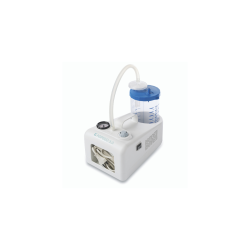
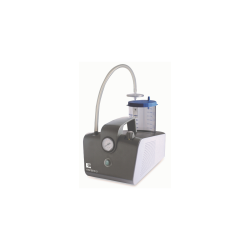
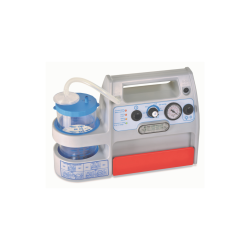
Medical Aspirators and Suction Units for Airway Management
Clinical Summary: Medical aspirators provide mechanical suction for airway secretion clearance, oral suctioning, wound irrigation, and post-operative suction in care homes, NHS settings, and emergency environments. Portable battery-operated aspirators are an essential emergency airway management resource in care homes where residents are at risk of aspiration, choking, or secretion accumulation, enabling immediate suction intervention before emergency services arrive.
Medical Aspirator Types
- Portable Battery Aspirators: Lightweight rechargeable battery-operated suction units for emergency airway clearance, domiciliary use, and community settings where mains power is unavailable, providing reliable suction pressure for oral and pharyngeal secretion clearance and emergency aspiration management.
- Mains-Powered Clinic Aspirators: High-flow mains-powered suction units for clinical room, ward, and post-operative suction applications requiring sustained high-flow suction over extended periods, with larger collection canister capacity for high-volume suction procedures.
- Portable Foot-Operated Aspirators: Mechanical foot-operated suction units providing emergency suction without electrical power dependency, suited to emergency and resource-limited settings where electrical supply cannot be guaranteed. No battery or mains power required.
- Neonatal and Paediatric Aspirators: Low-pressure suction units calibrated for safe neonatal and paediatric oral and nasal suctioning, with fine catheter attachments and pressure-limited suction to prevent mucosal trauma in vulnerable patients.
Clinical Compliance and Airway Management Standards
Medical aspirators supplied by Care Supplies carry MHRA registration as Class IIa or IIb medical devices under the UK Medical Devices Regulations, and comply with IEC 60601-1 electrical safety standards for medical electrical equipment. Care homes accommodating residents with dysphagia, neurological conditions, or conditions associated with secretion management risk should have a portable aspirator immediately available, with staff trained in its use as part of the care home emergency response capability. Suction catheters and collection canisters should be single-use and replaced after each patient use. Aspirator maintenance including filter replacement and canister cleaning should follow manufacturer schedules with documented records retained for CQC inspection.
| Aspirator Type | Power Source | Primary Application | Key Standard |
|---|---|---|---|
| Portable Battery | Rechargeable battery | Emergency, domiciliary, community | MHRA / IEC 60601 |
| Mains-Powered Clinic | Mains electrical | Clinical room, ward, post-operative | MHRA / IEC 60601 |
| Foot-Operated | No power required | Emergency, power-independent settings | MHRA |
| Neonatal and Paediatric | Mains or battery | Neonatal and paediatric suction | MHRA / IEC 60601 |
Frequently Asked Questions
Q: Should care homes have a suction unit available for emergency airway management?
A: Care homes should undertake a risk assessment of their resident population for aspiration and choking risk, and provide emergency airway management equipment proportionate to that risk. Where residents have diagnoses associated with dysphagia, neurological deterioration, or secretion management, a portable aspirator should be immediately available and staff should be trained in emergency oral suctioning procedures. CQC assesses emergency preparedness including first aid equipment as part of Safe inspections.
Q: How often should suction catheters be changed during aspiration procedures?
A: Suction catheters should be single-use and discarded after each suctioning episode. A new sterile catheter should be used for each suction pass to prevent introduction of infection from the catheter into the airway. Collection canisters should also be single-use or decontaminated between patients according to manufacturer guidance and local infection prevention and control policy.