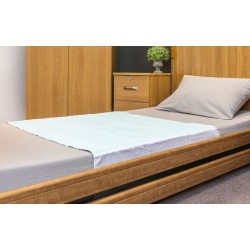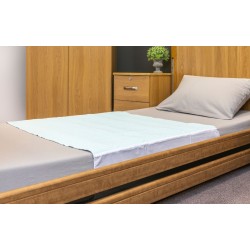
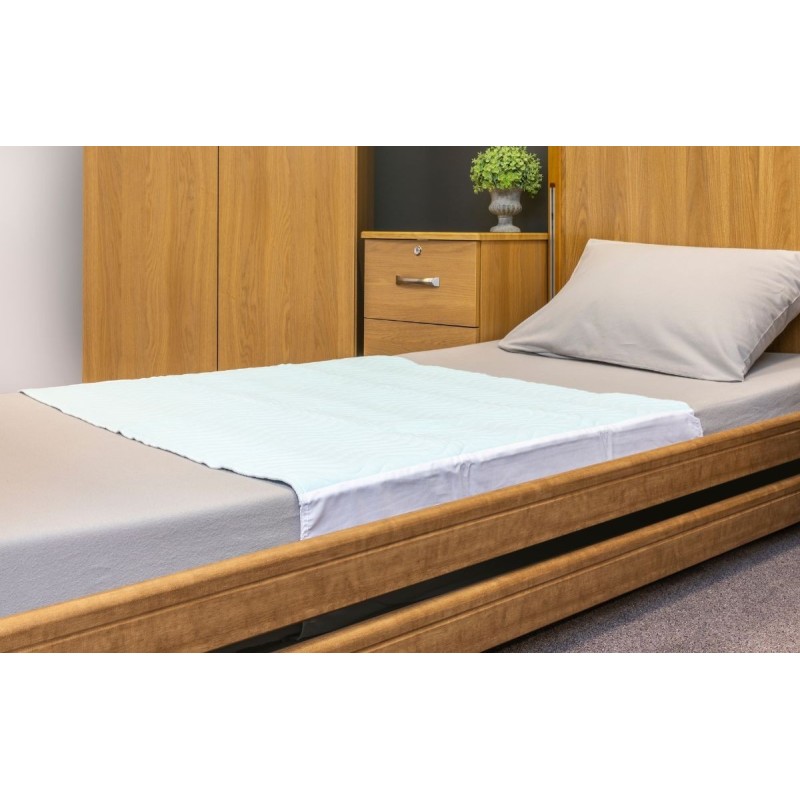


The 86x140cm reusable waterproof bed pad provides 4 litres of absorbency - the highest in this range - for very heavy overnight incontinence or full-bed protection requirements. The extended 140cm length covers from torso to lower leg on a standard single care home bed, and tuck-in flaps secure the pad through repositioning and pressure relief turns in accordance with MHOR 1992. The 300-wash guarantee and 40°C wash specification meet HTM 01-04 laundry decontamination standards.
| Specification | Detail |
|---|---|
| Absorbency | 4.0 litres |
| Dimensions | 86 x 140 cm |
| Reference | NCL-DBP/4 |
| Tuck-In Flaps | Yes - anchors under mattress |
| Wash Temperature | Machine washable at 40°C |
| Drying | Low heat tumble dryable |
| Wash Guarantee | 300 washes |
| Barrier Type | Waterproof barrier |
At 4 litres, this pad addresses the upper range of overnight urinary incontinence volume without requiring multiple pad changes, reducing nighttime care interventions that disturb sleep - a dignity consideration under CQC Regulation 10. MHOR 1992 benefits directly from the tuck-in flap design, which maintains pad position through turning cycles and reduces the carer effort associated with pad replacement during repositioning routines. NICE NG213 supports clinical selection of the appropriate absorbency level following continence assessment. NHS IPC and HTM 01-04 standards are met by the 40°C machine wash and low-heat drying specification.
When should the 4L pad be selected over the 2.1L or 3.2L options?
The 4L (86x140cm) pad is indicated where overnight urinary loss consistently saturates a 3.2L pad, or where extended body coverage is required. A continence nurse assessment under NICE NG213 should determine the appropriate absorbency level for individual residents, as over-specified products can delay appropriate clinical intervention for treatable incontinence.
Does the extended 140cm length affect use on profiling beds?
On standard 190cm profiling beds, the 140cm length allows 25cm of coverage to extend beyond the knee break when centred. Allow the pad to lie flat at the lower end to avoid folding at the knee section during elevation. The tuck-in flaps should be positioned at the widest mattress point to maintain grip through profiling movements.
Part of our specialist Patient Comfort and Care range. Continence and laundry products support dignity and hygiene management for care home residents and home care clients across the UK.