
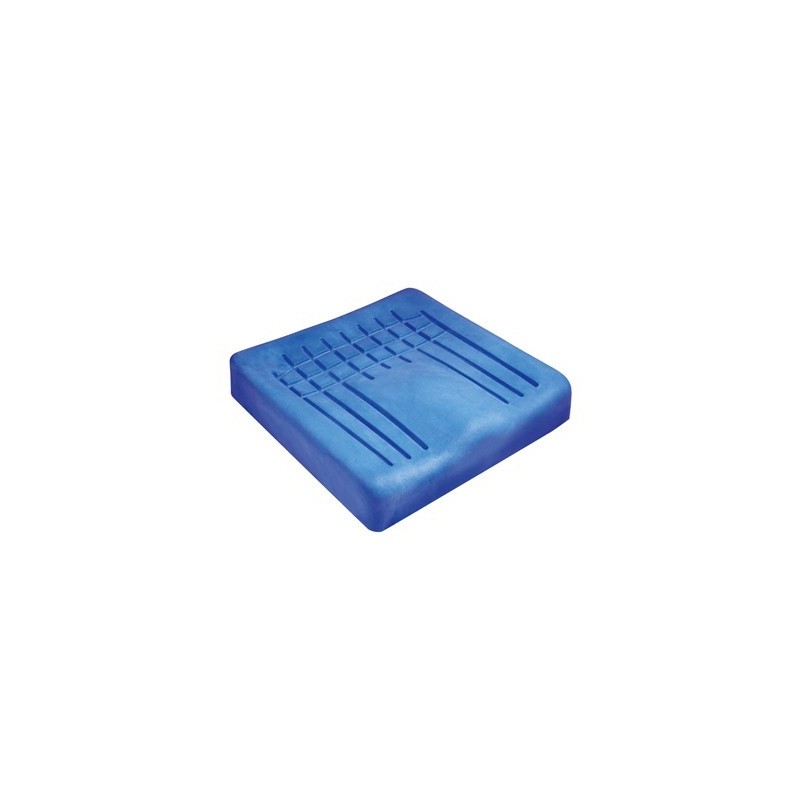


The Viscoflex Plus Cushion uses an injected high-density viscoelastic foam manufacturing process producing a durable skin-effect moulded body with an ergonomically shaped internal load-bearing core for sacral and ischial pressure redistribution. Available with a pommel option for postural stability. Three sizes with SWLs from 100kg to 150kg. Welded VP water-resistant 4-way stretch cover. Pairs with Viscoflex Multi-bearing mattress. High-to-very-high risk per NICE CG179. MDR 2017/745 Class I medical device.
| Specification | Detail |
|---|---|
| P361CA42421HF | 420 x 420 x 80mm - SWL 100kg (15 stone) |
| P361CA45421HF | 420 x 450 x 80mm - SWL 110kg (17 stone) |
| P361CA51461HF | 460 x 510 x 80mm - SWL 150kg (23 stone) |
| Construction | Injected HD visco foam - skin-effect moulded |
| Internal Core | Ergonomically shaped load-bearing core |
| Pommel Option | Available for postural stability (OT assessment required) |
| Cover | 4-way stretch welded VP water-resistant |
| Paired Mattress | Viscoflex Multi-bearing mattress |
| Clinical Risk Level | High-very high risk per NICE CG179 |
| Regulatory Status | MDR 2017/745 Class I medical device |
The Viscoflex Plus Cushion is a Class I medical device under MDR 2017/745. Clinical selection requires occupational therapist assessment confirming high-to-very-high risk seating need per NICE CG179. SWL must be verified against the resident's documented weight per MHOR 1992. Where the pommel option is prescribed, the occupational therapist must document the clinical rationale and confirm the pommel does not impair safe transfer from the seat. Equipment register records and MDR conformity documentation must be maintained for CQC Regulation 12 compliance.
What is injected foam and how does the manufacturing process affect clinical performance?
Injected foam is produced by injecting the foam precursor chemicals into a closed mould rather than by cutting sheets of pre-made foam block to the required shape and profile. The injection process allows the foam density, pore structure, and shape to be controlled precisely within the mould, producing a cushion body where the internal core density, the ergonomic shape, and the outer skin surface are all formed as a single integrated piece rather than assembled from separate components. The skin-effect outer layer is formed naturally during the moulding process as the foam reacts against the mould surface, producing a continuous, denser skin that is more resistant to abrasion, tearing, and surface cell breakdown than the cut surface of a block-foam cushion. In clinical terms, this means the Viscoflex Plus maintains its pressure redistribution performance and surface integrity over a longer service life than cut-foam equivalents, with the ergonomic core profile retained accurately rather than being susceptible to the tolerances introduced by mechanical cutting.
When is the pommel option clinically indicated, and what are the contraindications for its use?
A pommel is a raised forward projection from the front of the cushion seat surface, positioned between the user's thighs, that provides a physical barrier to prevent the resident from sliding forward or the legs from abducting outward. It is clinically indicated for residents with significant lower limb spasticity that causes involuntary abduction, for those with very limited pelvic and core muscle control who tend to slide into sacral sitting despite a standard pre-ischial ridge, and for those whose postural assessment identifies a specific need for medial thigh support that standard cushion geometry cannot address. Contraindications include: residents who use the cushion surface for assisted transfers where a pommel would obstruct the transfer path; residents with hip replacement where abduction restrictions make a fixed medial barrier a risk; and residents who may become distressed or agitated by a physical constraint at the anterior thigh. The pommel must never be used without documented occupational therapist assessment of the clinical indication and documented exclusion of each contraindication, as inappropriate pommel use may be considered a physical restraint under the Mental Capacity Act 2005.
