
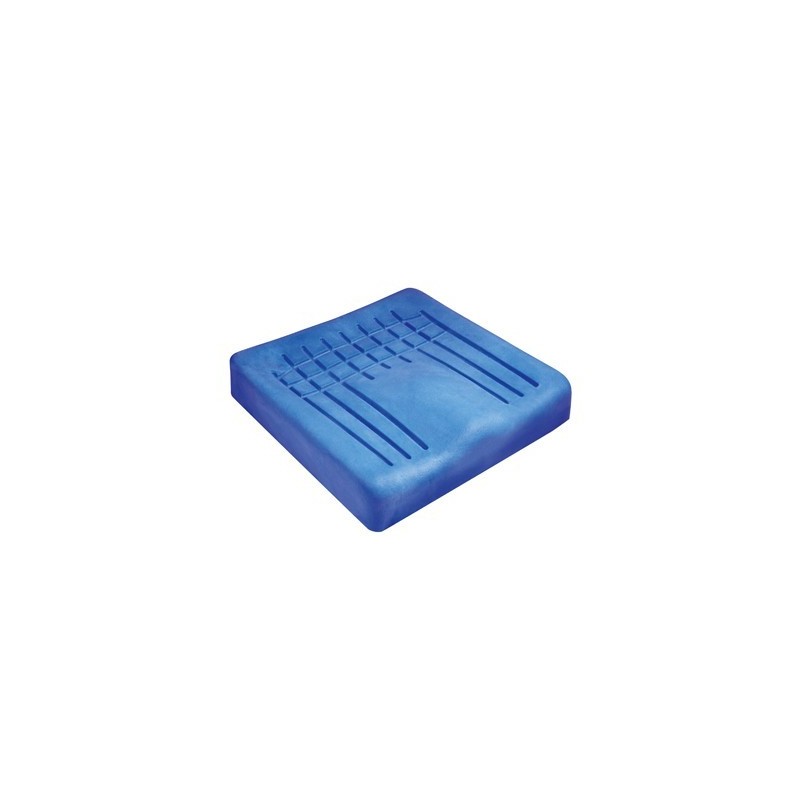


The Viscoflex Plus Bariatric Cushion provides high-to-very-high-risk pressure redistribution for bariatric residents, incorporating a pre-ischial ridge that prevents forward sliding and sacral sitting - a primary pressure injury risk mechanism in bariatric seating. Heavy-duty viscoelastic foam with ergonomic foam insert. Two sizes: NCL-P361CA56461HF (460x560x80mm, welded cover, 230kg SWL) and NCL-P361CA61501HF (500x610x80mm, stitched cover, 270kg SWL). Pairs with Viscoflex Bariatric Mattress. MDR 2017/745 Class I medical device.
| Specification | Detail |
|---|---|
| NCL-P361CA56461HF | 460 x 560 x 80mm - SWL 230kg (36 stone) - welded VP cover |
| NCL-P361CA61501HF | 500 x 610 x 80mm - SWL 270kg (42 stone) - stitched VP cover + anti-slip base |
| Clinical Feature | Pre-ischial ridge for anti-slide bariatric positioning |
| Foam | Heavy-duty viscoelastic with ergonomic foam insert |
| Paired Mattress | Viscoflex Bariatric (NCL-P161MFPMHF120) |
| Clinical Risk Level | High-very high risk per NICE CG179 |
| Regulatory Status | MDR 2017/745 Class I medical device |
The Viscoflex Plus Bariatric Cushion is a Class I medical device under MDR 2017/745. Clinical selection requires occupational therapist bariatric seating assessment per NICE CG179, with the pre-ischial ridge indication confirmed as appropriate for the individual resident's pelvic control and sitting posture. SWL must be verified per MHOR 1992; the correct variant must be selected to cover the resident's documented weight. Seat pan dimensions must be confirmed compatible with the selected cushion footprint. Equipment register records and MDR conformity documentation must be maintained for CQC Regulation 12 compliance.
What is the pre-ischial ridge and how does it prevent pressure injury in bariatric seating?
The pre-ischial ridge is a raised foam feature built into the front section of the cushion seat surface, positioned anterior to where the ischial tuberosities naturally sit during correct upright seated posture. When a bariatric resident begins to slide forward in the seat - which can occur due to reduced core strength, lower limb weakness, fatigue, or the weight of the legs pulling the pelvis forward - the ischial tuberosities move forward and downward toward the ridge, which physically resists the forward motion and prevents the pelvis from completing the forward slide. Without the ridge, the pelvis tilts posteriorly as it slides, producing sacral sitting where the sacrum and coccyx bear the primary seated load. Sacral sitting is a well-documented pressure injury risk mechanism because the sacrum has a bony, poorly-padded contact surface and sustained load at that site in combination with the shear forces of the forward sliding motion significantly increases the risk of pressure injury development. The pre-ischial ridge interrupts this mechanism before sacral sitting is established, maintaining the correct ischial-bearing posture and the appropriate pressure distribution across the seated contact surface.
Why does the larger NCL-P361CA61501HF use a stitched cover rather than the welded cover of the smaller variant?
The welded cover construction on the smaller NCL-P361CA56461HF provides enhanced seam fluid resistance compared to stitching, as welded seams have no needle holes and no exposed thread. For the larger NCL-P361CA61501HF at 500 x 610mm, the greater panel dimensions and the higher mechanical loads placed on the cover seams during bariatric use make stitched seams the structurally safer construction choice; the wider panels require a seam construction that provides consistent tensile strength across the full seam length under repeated loading and cleaning cycles. This is the same consideration as the stitched seams on bariatric static mattress variants noted elsewhere in the range. The stitched cover on the larger variant has the same decontamination implications as other stitched-seam products: the seam stitching creates microscopic penetration points that require confirmation from the infection control lead that the standard wipe-clean protocol meets the NHS IPC requirement for the specific care environment, and that additional attention to seam lines is given following incontinence events.
