
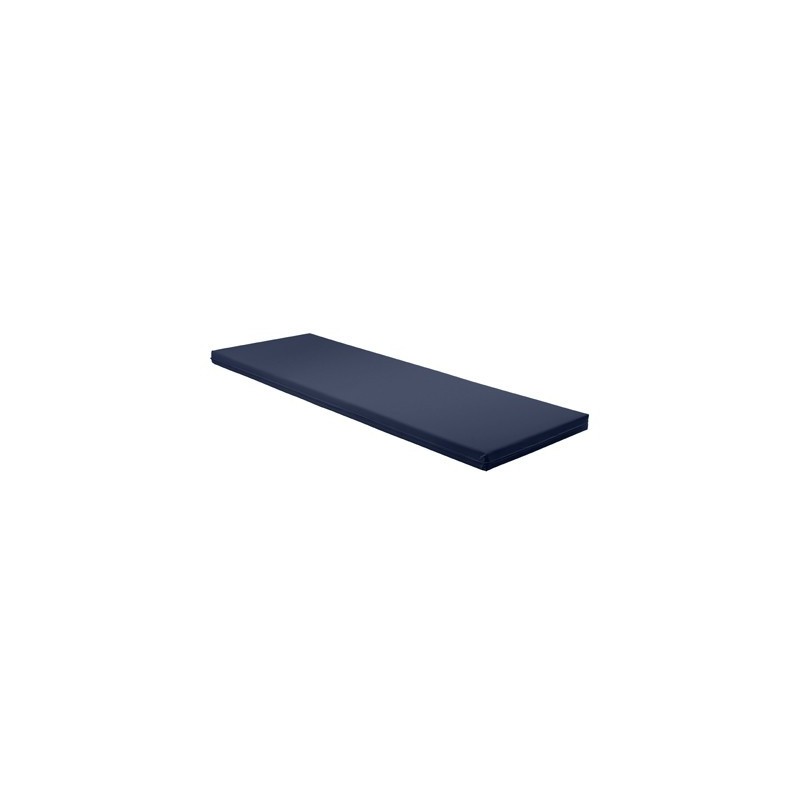


The Foam Fall Mats cushion the impact of accidental roll-outs from low beds, reducing the risk of injury from falls that reach the floor. Available in two variants: NCL-HFC102 (1830 x 610 x 100mm standard foam) and NCL-HFC103 (1420 x 815 x 64mm high-density foam). VP water-resistant cover for wipe-clean decontamination. For use as part of a broader falls prevention and management plan per NICE CG161 and NICE NG45. 1-year warranty.
| Specification | Detail |
|---|---|
| NCL-HFC102 | 1830 x 610 x 100mm - standard foam |
| NCL-HFC103 | 1420 x 815 x 64mm - high-density foam |
| Cover | VP water-resistant |
| Bed Compatibility | Low beds and ultra-low beds |
| Clinical Application | Fall impact reduction - component of falls management plan |
| Warranty | 1 year |
Foam fall mats are clinical safety accessories deployed as part of a falls prevention and management plan under NICE CG161 and NICE NG45, which require that falls risk is assessed for all residents in care settings and that environmental modifications including flooring protection are considered. CQC Regulation 12 requires registered providers to take all reasonable steps to prevent avoidable harm, of which fall impact reduction is a documented component. Mat deployment must be documented in the resident's individual risk management plan and reviewed at each falls review. The VP cover must be decontaminated per NHS IPC guidance following any floor contact event involving bodily fluid exposure. The mat must not be used as a trip hazard management measure in shared corridors or common areas; deployment is restricted to the bedside floor area alongside the specific resident's bed.
Does a fall mat replace the need for bed rails or other falls prevention measures?
No. A fall mat is a fall impact reduction measure, not a fall prevention measure; it reduces the severity of injury if a fall occurs but does not prevent the fall from happening. NICE NG45 and the MHRA bed rail safety guidance require that falls prevention interventions are selected based on individual risk assessment, and that the use of physical restraints - including bed rails - is evaluated against the Mental Capacity Act 2005 principles of least restriction and best interest. A fall mat may be used alongside a low or ultra-low bed as part of a strategy that avoids or reduces rail use, but only when the clinical assessment has determined that a low bed with floor protection is the appropriate intervention for that specific resident's falls risk profile, cognitive capacity, and care needs. The care team must document the rationale for using a fall mat as part of the restraint-reduction strategy and review its ongoing appropriateness at each falls review. Where a fall mat is in place, care staff must also confirm at each observation visit that the mat is in position and that the resident has not moved it or become entangled with it.
When should the standard (NCL-HFC102) variant be selected over the high-density (NCL-HFC103) variant?
The standard NCL-HFC102 (1830 x 610 x 100mm) provides a deeper 100mm foam layer across a narrower 610mm floor width, making it more effective for absorbing impact energy from falls where the fall height and resident weight are within the standard foam's compression range, and where the floor area alongside the bed is narrow enough that a 610mm mat provides adequate coverage. The higher-density NCL-HFC103 (1420 x 815 x 64mm) is wider at 815mm and shallower at 64mm, providing a broader coverage footprint at a lower profile that may be preferable in rooms where the mat must occupy less floor height for storage or where the wider coverage zone is more clinically appropriate for the individual resident's fall pattern. High-density foam provides greater resistance to compression under load, which may be preferable for heavier residents where the standard foam risks bottoming out under the full impact load. The falls lead or occupational therapist should make the selection based on the specific resident's fall pattern, body weight, bed height, and room floor plan.