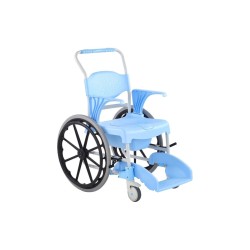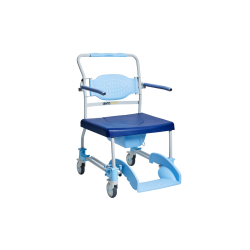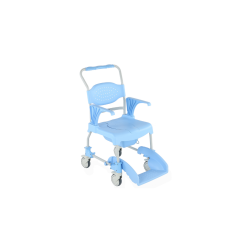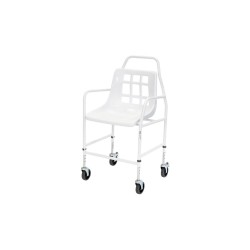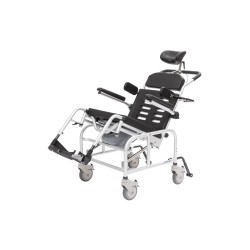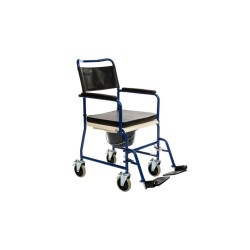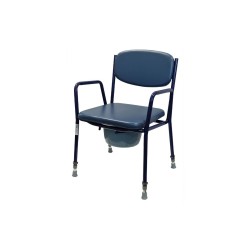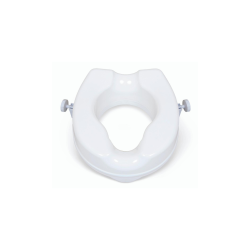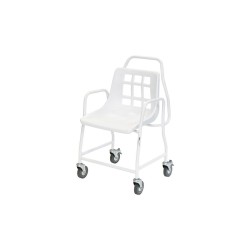
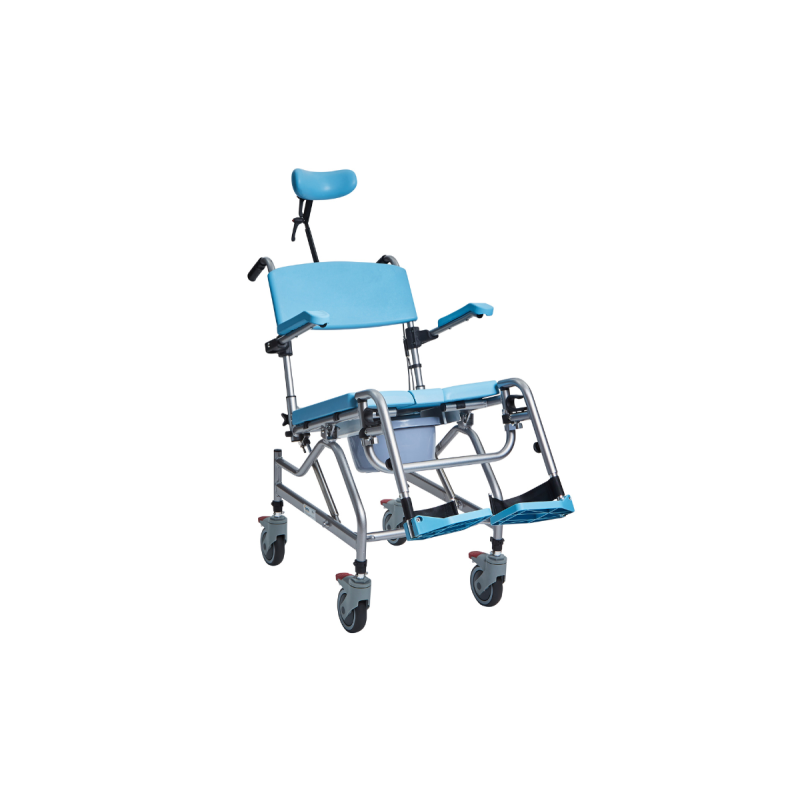


The Alerta Aqua Community Tilt-in-Space is a 120kg-rated 4-in-1 shower commode with gas-assisted tilt-in-space and an LED-illuminated commode pan. The gas-assisted tilt mechanism provides configurable postural positioning for pressure redistribution in line with NICE CG179 tissue viability guidance, without requiring manual carer adjustment during the care episode. Height adjustment from 59.5-64.5cm and the full Aqua component specification - removable pot, adjustable footrest, swing-away armrests, and 2-year Alerta guarantee - are standard across the model.
| Specification | Detail |
|---|---|
| Reference | NCL-ALT-SC300 |
| Safe Working Load | 120 kg |
| Tilt Mechanism | Gas-assisted tilt-in-space |
| Commode Pan | LED-illuminated, removable |
| Height Adjustment | 59.5 - 64.5 cm |
| Propulsion | Carer-propelled; 5-inch swivel castors |
| Frame Material | Plastic-coated steel |
| Footrest | 5-position adjustable, removable |
| Armrests | Removable swing-away |
| Functions | Commode, shower, transit, transfer |
| Guarantee | 2 years (Alerta) |
NICE CG179 (pressure ulcer prevention) recommends pressure redistribution for individuals spending extended periods in seated positions; the tilt-in-space mechanism directly supports this by repositioning the resident during shower and commode use without a separate transfer. CQC Regulation 12 (safe care) equipment obligations are supported by the gas-assisted tilt holding position safely without carer stabilisation. CQC Regulation 10 (dignity) is served by enabling continuous personal care without repeated position changes. MHOR 1992 carer obligations are reduced by the carer-propelled 4-in-1 design, which limits transfers between bedroom and wet room to a single episode.
What is the clinical purpose of the tilt-in-space function on this commode?
Tilt-in-space rotates the entire seating surface around a fixed point, maintaining the resident in a supported postural position while redistributing pressure away from the sacrum and ischial tuberosities. For residents with limited repositioning tolerance or at high pressure ulcer risk under NICE CG179, this allows personal care to be completed without the pressure loading that occurs in a standard upright commode position. The gas-assisted mechanism holds the tilt angle without ongoing carer effort.
What is the LED commode pan and when is it clinically indicated?
The LED-illuminated commode pan provides visible guidance during night-time commode use, allowing the carer to confirm pot positioning without additional room lighting that would disturb resident sleep. It is particularly useful in dementia care settings where night-time commode use is frequent and where minimising sensory stimulation is a care plan objective consistent with CQC Regulation 10 person-centred care.