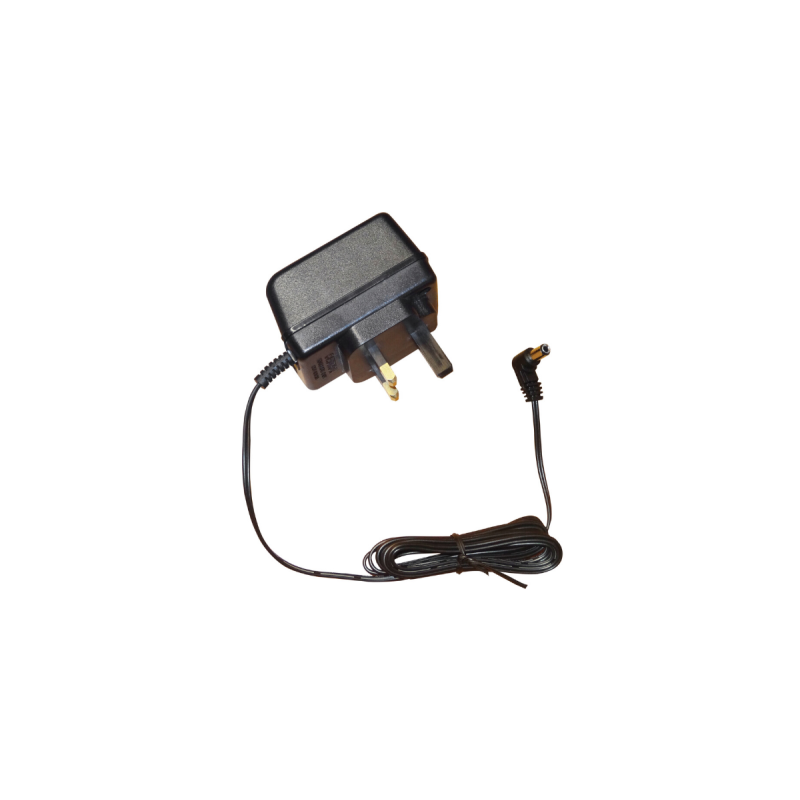

The Mains Adaptor provides a permanent mains power supply for the Alerta Alarm Monitor (NCL-AUAM) and Alerta Wall Point Receiver, eliminating battery reliance for care settings where these monitoring output devices operate continuously. By removing the battery from the power supply path, the Mains Adaptor eliminates the battery depletion failure mode and reduces the maintenance overhead associated with battery status monitoring and scheduled replacement in care home equipment maintenance programmes.
| Specification | Detail |
|---|---|
| Product Code | NCL-MA |
| Compatible With | Alerta Alarm Monitor (NCL-AUAM) and Wall Point Receiver |
| Function | Mains power - eliminates battery for monitoring units |
| Application | Permanent fixed installations in care homes and wards |
| Battery Dependency | Eliminated - continuous mains power supply |
| Installation | Connects to Alarm Monitor or Wall Point Receiver power input |
CQC Regulation 17 (Good Governance) requires that monitoring systems are maintained in effective operational order and that monitoring gaps are documented and addressed. Battery failure is a documented failure mode for monitoring systems that rely on battery-powered output devices: a battery-powered Alarm Monitor or Wall Point Receiver will eventually deplete its battery and cease to function, creating a monitoring gap that may not be immediately detected by care staff. The Mains Adaptor eliminates this failure mode for permanent monitoring installations, ensuring the alerting unit operates continuously regardless of battery status. CQC Regulation 12 (Safe Care and Treatment) requires that fall prevention monitoring is consistently available for high-risk patients: mains-powered monitoring is appropriate for patients whose individual falls assessment identifies continuous monitoring as a clinical requirement rather than an occasional precaution.
When using the Mains Adaptor, should a backup battery also be fitted in the Alarm Monitor or Wall Point Receiver?
Whether to maintain a backup battery alongside the Mains Adaptor depends on the facility's power continuity requirements. In care environments where power interruption is a realistic risk - for example, in older buildings with unreliable electrical supply, or in any care setting during the period of a planned maintenance electrical isolation - maintaining a backup battery in the Alarm Monitor or Wall Point Receiver alongside the Mains Adaptor ensures that monitoring continues through short power interruptions. In care environments with reliable mains power and no planned electrical isolation at the monitoring location, the Mains Adaptor alone is sufficient and the battery slot can remain empty. Consult the care home's facilities manager about the power reliability of the specific circuits supplying the monitoring equipment locations to determine the appropriate backup battery policy.
Is one Mains Adaptor sufficient, or is a separate adaptor required for each Alarm Monitor or Wall Point Receiver in the care home?
One Mains Adaptor is required per monitoring unit - each Alarm Monitor and each Wall Point Receiver requires its own dedicated Mains Adaptor to operate on mains power. The adaptor connects to the power input port of the individual monitoring unit and cannot power multiple units simultaneously. For a care home operating five Alarm Monitors across five rooms, five Mains Adaptors are required for all five to operate on mains power. Care homes with both wired Alerta mats (using Alarm Monitors) and wireless Alerta mats (using Wall Point Receivers) use the same Mains Adaptor model for both device types, simplifying procurement and reducing the number of different power accessory variants required in the care home's equipment store.
Part of our comprehensive Patient Sensor Alarms range. Patient alarm accessories ensure reliable performance and extended functionality of sensor alarm systems in care homes and NHS settings.